


We know that choosing a vehicle, especially a full-size SUV like the Chevrolet Tahoe, is a major decision. It’s more than just a purchase; it’s a long-term investment in your family and lifestyle.
Understanding the entire vehicle lifecycle is crucial. This includes everything from the initial purchase to ongoing maintenance and eventual trade-in. We aim to equip you with the knowledge to make informed choices at every stage.
In this extensive guide, we will navigate the modern vehicle purchase and maintenance process. We will delve into financing strategies, including how to secure the best deals and options, such as exploring local dealership offers. We will also cover essential service practices that keep your vehicle running smoothly. Further, we will explore the Chevrolet Tahoe’s impressive history, its architectural evolution, and its powerful engine options. We will also highlight its advanced safety and cabin technologies, as well as its specialized applications. Our goal is to help you fully understand what makes this SUV a market leader.
Strategies for Modern Automotive Financing and Service
The journey of vehicle ownership extends far beyond the initial excitement of driving a new car off the lot. For a significant investment like a Chevrolet Tahoe, understanding the nuances of automotive financing and the importance of consistent service is paramount. These two pillars directly influence your overall satisfaction, the vehicle’s longevity, and its eventual resale value. Modern financing options are more diverse than ever, offering a range of solutions to fit different financial situations. Similarly, contemporary vehicle service is not just about repairs; it’s about proactive maintenance that leverages advanced diagnostics and specialized expertise to ensure optimal performance and safety.
When considering a major purchase like a new Tahoe, evaluating your trade-in value is often the first financial step. Tools that provide a quick, accurate assessment of your current vehicle’s worth can be incredibly helpful in budgeting for your next SUV. This initial valuation helps determine your equity, which can then be applied towards a down payment, significantly impacting your monthly payments and overall loan structure. Beyond the sticker price, it’s crucial to consider the total cost of ownership (TCO), which encompasses not only the purchase price but also insurance, fuel, maintenance, and potential depreciation over time. A comprehensive understanding of TCO enables more realistic budget planning and helps retain the asset’s value throughout its lifespan. For those looking to understand their options for acquiring a new or used Tahoe, exploring local financing solutions, such as those offered through Willis Chevy Tahoe financing, can provide tailored plans and competitive rates designed to fit individual needs. This holistic approach to financing ensures that your investment is sound and sustainable.
Balancing Monthly Payments with Automotive Financing and Service
One of the most critical aspects of automotive financing is striking the right balance between manageable monthly payments and the loan’s long-term cost. This involves a careful consideration of several factors, starting with interest rates. A lower interest rate can dramatically reduce the total amount paid over the life of the loan, making it a key negotiation point. Loan terms, typically ranging from 36 to 84 months, also play a significant role. While longer terms result in lower monthly payments, they often lead to higher overall interest paid and can mean you’re paying for a vehicle for a longer period during which its value depreciates.
Understanding the concept of residual value is particularly relevant for those considering leasing or shorter loan terms. Residual value is the estimated value of a vehicle at the end of a lease or loan period. Vehicles known for strong residual values, like the Chevrolet Tahoe, can offer more favorable lease terms or better trade-in opportunities down the line. Your credit score and history will place you into different credit tiers, which directly influence the interest rates you qualify for. A strong credit profile is your best asset in securing the most competitive financing terms. Finally, a substantial down payment can significantly reduce the principal amount financed, leading to lower monthly payments and less interest accrual. It also provides immediate equity in the vehicle, which can be beneficial if you need to sell or trade it in sooner than expected. By carefully evaluating these elements, you can structure a financing plan that aligns with your financial goals and ensures you are comfortable with your monthly automotive commitments.
The Role of Preventive Maintenance in Automotive Financing and Service
Preventive maintenance is not merely about keeping your vehicle running; it’s a strategic component of responsible vehicle ownership that directly impacts both your safety and your financial well-being. For a robust full-size SUV like the Chevrolet Tahoe, adhering to a diligent maintenance schedule is crucial for preserving its performance, reliability, and, ultimately, its resale value. A well-documented service history, often tracked through platforms like CARFAX, provides transparency and peace of mind, assuring future buyers that the vehicle has been properly maintained. This historical record can significantly enhance the vehicle’s market appeal and command a higher price when it’s time to sell or trade in.
Long-term reliability is a direct outcome of consistent preventive care. Regular oil changes, tire rotations, brake inspections, and fluid checks prevent minor issues from escalating into costly repairs. For instance, ensuring the engine’s fluids are clean and at optimal levels can extend the life of critical components like the engine and transmission, which are expensive to replace. The Tahoe, with its powerful engines and advanced systems, benefits immensely from this proactive approach. Furthermore, maintaining your vehicle according to the manufacturer’s recommended maintenance schedules helps ensure that all warranty conditions are met, protecting you from unexpected repair costs during the warranty period. Skipping scheduled services could void parts of your warranty, leaving you exposed to out-of-pocket expenses. Investing in preventive maintenance is an investment in your Tahoe’s longevity and your financial security, ensuring it remains a dependable and valuable asset for years to come.
The Architectural Evolution of the Full-Size SUV
The Chevrolet Tahoe’s journey through automotive history is a testament to continuous innovation and adaptation, particularly evident in its architectural evolution. Each generation has built upon its predecessor, refining the full-size SUV experience and responding to changing consumer demands for space, capability, and comfort. The Tahoe’s foundation has always been rooted in robust truck platforms, ensuring its renowned durability and towing prowess.
The first generation (1992–2000) of the Tahoe, emerging from the K5 Blazer, was built on the GMT400 platform. Initially offered as a two-door model, a four-door variant was introduced in 1995 and quickly became the more popular choice. This platform provided a sturdy, body-on-frame construction, characteristic of full-size trucks, giving the Tahoe its formidable presence and capability. The first-generation 4-door curb weight was around 5,500 lb (2,500 kg).
The turn of the millennium brought the second generation (2000–2006) with the GMT800 platform. This redesign introduced a more refined ride and improved interior packaging while retaining the robust underpinnings. The GMT800 platform marked a significant step forward in engineering, offering better handling and safety features than its predecessor. The second-generation Tahoe had a curb weight of approximately 5,302 lb (2,405 kg).
The third generation (2007–2014) saw the Tahoe transition to the GMT900 platform. This generation brought a more aerodynamic exterior design, significantly upgraded interiors, and advanced safety technologies. It was during this era that Tahoe truly began to shed its utilitarian image in favor of a more upscale, family-friendly appeal. The 2011 model, for example, had an NHTSA rollover risk of 24.6%, demonstrating improved safety metrics.
The fourth generation (2015–2020) adopted the GMT K2XX platform, which further enhanced efficiency and refinement. This platform introduced lighter materials and improved aerodynamics, resulting in better fuel economy without compromising capability. Interiors became even more luxurious, and technology integration advanced significantly.
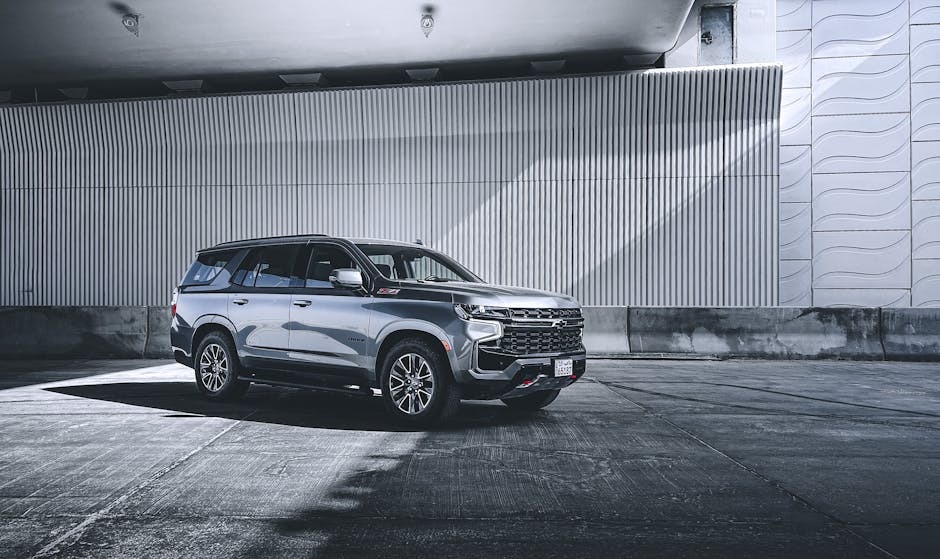
The current fifth generation (2021–present) represents a monumental leap forward, utilizing the GMT T1XX platform. A key innovation in this generation is the introduction of an independent rear suspension, a first for the Tahoe. This change dramatically improves ride comfort, handling dynamics, and, crucially, interior space, particularly for third-row passengers and cargo. The fifth-generation Tahoe measures 210.7 inches (5,352 mm) in length, 81.1 inches (2,060 mm) in width, and 120.9 inches (3,071 mm) in wheelbase, with a curb weight of ≥5,473 pounds (2,483 kg). These dimensions highlight its significant size and the generous interior volume, including a maximum cargo volume of 122.7 cubic feet (3,474 L). The expanded wheelbase and optimized packaging have made the latest Tahoe the most spacious and comfortable iteration yet, reinforcing its position as a segment leader.
Generation Production Years Platform Key Dimensions (approx.) Curb Weight (approx.) Key Architectural Features First 1992–2000 GMT400 Length: ~191.2 in (2-dr), ~199.6 in (4-dr) 4,500 lb (2-dr), 5,500 lb (4-dr) Body-on-frame, solid rear axle Second 2000–2006 GMT800 Length: ~196.9 in 5,302 lb More refined ride, improved interior packaging Third 2007–2014 GMT900 Length: ~202 in ~5,500 lb Aerodynamic design, upgraded interiors Fourth 2015–2020 GMT K2XX Length: ~204 in ~5,400 lb Lightweight materials, enhanced efficiency Fifth 2021–present GMT T1XX Length: 210.7 in, Wheelbase: 120.9 in ≥5,473 lb Independent Rear Suspension, increased interior space
Modern Powertrain Options and Performance Metrics
The heart of any full-size SUV lies in its powertrain, and the Chevrolet Tahoe has consistently offered a range of powerful, capable engine options to meet diverse demands, from daily commuting to heavy-duty towing. Across its generations, particularly in its most recent iterations, the Tahoe’s engine and transmission choices balance robust performance with increasing efficiency.
For the fourth generation (2015–2020), the primary engine was the 5.3L Ecotec3 V8, a workhorse delivering 355 horsepower (265 kW) and 383 lb⋅ft (519 N⋅m) of torque. This engine, paired with either a 6-speed or later an 8-speed automatic transmission, provided a strong balance of power and everyday usability. A more potent option was the 6.2L Ecotec3 V8, available in higher trims, which boasted 420 horsepower (313 kW) and 460 lb⋅ft (620 N⋅m) of torque, offering even more exhilarating acceleration and towing capability.
The fifth generation (2021–present) continues this tradition of powerful V8 options while introducing a significant new player: the 3.0L Duramax Diesel. This diesel engine is a game-changer for the full-size SUV segment, providing exceptional torque and improved fuel economy. For the 2025 model year, the Duramax diesel is rated at an impressive 305 horsepower and a class-leading 495 lb-ft of torque, making it an ideal choice for those who frequently tow or desire greater efficiency on long journeys. The standard gasoline engines remain the reliable 5.3L V8 and the potent 6.2L V8, both now exclusively paired with a smooth and responsive 10-speed automatic transmission. This advanced transmission optimizes power delivery and fuel efficiency across a wider range of driving conditions.
Towing capacity is a critical metric for a vehicle like the Tahoe. While specific figures vary by engine, drivetrain (2WD vs. 4WD), and configuration, recent models with the 5.3L V8 can tow upwards of 8,400 pounds, with the 6.2L V8 and Duramax diesel often exceeding this, providing ample capability for boats, campers, and large trailers. Fuel economy ratings, while not the primary focus for a full-size SUV, have seen continuous improvements. The Duramax diesel, in particular, offers superior mileage compared to its gasoline counterparts, with EPA estimates for the fifth generation reaching the mid-20s on the highway, a significant advantage for long-distance travel. The robust engine lineup ensures that whether your priority is raw power, towing prowess, or enhanced fuel efficiency, there’s a Tahoe powertrain to match your needs.
Safety Innovations and Cabin Technology
The Chevrolet Tahoe has consistently evolved to integrate cutting-edge safety features and advanced cabin technologies, transforming the driving experience into one that is both secure and connected. Each generation has seen significant advancements, culminating in the highly sophisticated offerings of the current fifth-generation models.
Safety is paramount in a family-oriented SUV, and the Tahoe has continuously introduced innovations to protect its occupants. Modern Tahoes come equipped with a comprehensive suite of active safety and driver-assist features. For the 2025 facelift, new features like Intersection Automatic Emergency Braking enhance protection by detecting potential collisions at intersections and automatically applying brakes if necessary. Side Bicyclist Alert adds another layer of urban safety, warning drivers of cyclists in their blind spots. Other crucial advancements include Front Pedestrian and Bicyclist Braking, Rear Cross Traffic Braking, and Blind Zone Steering Assist with Trailering, which extends blind-spot monitoring to cover a connected trailer. Features like Adaptive Cruise Control and HD Surround Vision further enhance a safer, less stressful driving experience. The availability of Super Cruise hands-free driving technology, now even compatible with trailering on select trims, represents a significant leap towards autonomous driving, enabling hands-free operation on compatible highways and reducing driver fatigue on long journeys.
Inside the cabin, the Tahoe offers a luxurious and technologically advanced environment. The centerpiece of the infotainment system in the latest models is an impressive 17.7-inch diagonal center touch-screen, which is best-in-class, providing intuitive control over navigation, media, and vehicle settings. This system seamlessly integrates with Google built-in, offering access to Google Maps, Google Assistant, and Google Play apps directly from the dashboard. Wireless Apple CarPlay and Android Auto are standard, ensuring effortless smartphone connectivity. For enhanced driver information, a 15-inch diagonal Head-Up Display projects key data onto the windshield, keeping drivers’ eyes on the road.
Beyond technology, the interior design emphasizes comfort and versatility. The fifth-generation Tahoe, with its independent rear suspension, has significantly increased passenger legroom in the second and third rows, making it genuinely comfortable for adults. The cargo area is highly configurable, offering an impressive 122.7 cubic feet of cargo volume and easily adaptable to various hauling needs. Premium materials, including available first- and second-row leather seating in trims like High Country and Premier, elevate the cabin’s ambiance. Features like the available AutoSense Power Liftgate, which opens automatically when the key fob is in range, add convenience to daily use. The combination of advanced safety systems, state-of-the-art infotainment, and a thoughtfully designed, spacious interior makes the modern Tahoe a truly exceptional vehicle for families and adventurers alike.
Specialized Applications and Fleet Variants
The inherent robustness and versatility of the Chevrolet Tahoe have made it a preferred platform for a variety of specialized applications beyond its civilian role. Its strong body-on-frame construction, powerful engines, and spacious interior make it highly adaptable for demanding tasks, particularly within law enforcement, military, and commercial fleets.
One of the most widely recognized specialized variants is the Police Pursuit Vehicle (PPV). These Tahoes are specifically engineered for law enforcement agencies, featuring heavy-duty suspensions, larger brakes, enhanced cooling systems, and specialized electrical systems to support police equipment. The PPV variant is designed for high-speed pursuits and rigorous daily patrol duties, offering superior handling and durability compared to standard civilian models. Alongside the PPV, the Special Service Vehicle (SSV) package is also available. The SSV Tahoe is designed for roles that require robust capability but not necessarily high-speed pursuit, such as K9 units, detective vehicles, or off-road patrol. These often include features like increased ground clearance and underbody protection. The 2021 model year saw significant updates to both PPV and SSV variants, leveraging the new independent rear suspension for improved ride and handling, crucial for law enforcement operations.
Another notable specialized application is the Light Service Support Vehicle (LSSV), a military variant based on the Tahoe/Suburban platform. These vehicles are modified for military use, often featuring a Duramax diesel engine for increased range and torque, enhanced off-road capabilities, and provisions for military communications and equipment. The LSSV serves a range of support roles, from personnel transport to command and control, demonstrating the Tahoe’s adaptability in the most challenging environments.
Beyond these dedicated fleet vehicles, the Tahoe has also had unique powertrain variants, such as the two-mode hybrid model offered from 2008 to 2013. This system combined a 6.0L V8 engine with electric motors, providing improved fuel economy, particularly in city driving, and showcasing GM’s early commitment to hybrid technology in full-size SUVs. While the hybrid model was discontinued, it paved the way for future efficiency improvements, including the modern Duramax diesel option.
The Tahoe’s global footprint also extends to various international markets. While primarily designed for North America, it has been sold in the Middle East, parts of Asia (e.g., the Philippines and South Korea), and South America (e.g., Bolivia and Chile). Production for these markets often occurs at key assembly locations, such as Arlington, Texas, a major hub for GM’s full-size SUVs, and historically in Janesville, Wisconsin, and Silao, Mexico. There have also been instances of regional assembly, such as in Minsk, Belarus, for Russia and CIS markets, and recent introductions into the Chinese market. This global presence underscores Tahoe’s universal appeal as a capable and reliable full-size SUV, adaptable to diverse road conditions and consumer preferences worldwide.
Frequently Asked Questions about Full-Size SUV Ownership
What are the primary differences between the fourth and fifth-generation Tahoe?
The transition from the fourth-generation (GMT K2XX, 2015-2020) to the fifth-generation (GMT T1XX, 2021-present) Chevrolet Tahoe marked a significant evolution in the full-size SUV segment. The most impactful change is the adoption of an independent rear suspension (IRS) in the fifth generation, replacing the solid rear axle of previous models. This architectural shift dramatically improved ride quality, handling dynamics, and interior packaging. With the IRS, the fifth-generation Tahoe offers a smoother, more refined ride, especially over rough terrain, and enhanced stability. Critically, it also allowed for a lower load floor and increased interior space. This translates to significantly more third-row legroom and expanded maximum cargo volume (122.7 cu ft vs. 94.7 cu ft in the fourth gen). The fifth-gen also grew in overall dimensions, with a longer wheelbase and overall length, further contributing to its roomier cabin. Technology also saw major upgrades, including larger infotainment screens, more advanced driver-assistance features, and the introduction of the Duramax diesel engine as a new powertrain option.
How does the 2025 facelift update the current SUV model?
The 2025 facelift brings a substantial refresh to the fifth-generation Tahoe, focusing on enhanced design, advanced technology, and powertrain refinements. Aesthetically, the 2025 model features a redesigned front fascia with new grilles and headlights, giving it a bolder and more modern appearance. The rear also receives updates with new taillight designs. Inside, the cabin undergoes a significant overhaul, highlighted by a new, larger 17.7-inch diagonal center touchscreen and a revised dashboard layout that integrates the screen more seamlessly. New interior trim options and materials elevate the perceived quality and comfort. Technologically, the 2025 Tahoe introduces several new active safety features, such as Intersection Automatic Emergency Braking, Side Bicyclist Alert, and enhanced Blind Zone Steering Assist with Trailering. The powerful 3.0L Duramax diesel engine gets a power boost, now delivering 305 horsepower and 495 lb-ft of torque, and is available on more trims, including the Z71 for the first time. These updates ensure the Tahoe remains competitive and at the forefront of the full-size SUV market.
What is the significance of the Duramax diesel engine in a full-size SUV?
The introduction and continued refinement of the 3.0L Duramax diesel engine in the Chevrolet Tahoe represent a significant advantage for full-size SUV owners. Traditionally, large SUVs have been associated with V8 gasoline engines, which offer ample power but can be less fuel-efficient, especially when towing or during extended highway drives. The Duramax diesel changes this dynamic by providing a compelling alternative. Its primary significance lies in its exceptional torque output (up to 495 lb-ft in the 2025 model), which is crucial for effortless towing and hauling heavy loads. This high torque at lower RPMs means the engine doesn’t have to work as hard, leading to less strain and potentially longer engine life. Moreover, diesel engines are inherently more fuel-efficient than their gasoline counterparts. The Duramax offers significantly better fuel economy ratings, particularly on the highway, translating to fewer stops at the pump and a greater driving range. This makes the Tahoe a more economical choice for long-distance travel and frequent towing, without sacrificing the power and capability expected from a full-size SUV.
Conclusion
The Chevrolet Tahoe stands as an undisputed leader in the full-size SUV segment, a position it has maintained through continuous innovation and a deep understanding of what discerning drivers and families need. From its foundational GMT platforms to the cutting-edge independent rear suspension and sophisticated technology of the current generation, the Tahoe’s evolution reflects a commitment to capability, comfort, and safety. Its diverse powertrain options, including the highly efficient Duramax diesel, ensure that there’s a Tahoe perfectly suited for every lifestyle, whether it’s daily family duties, adventurous road trips, or demanding towing tasks.
Understanding the entire vehicle lifecycle, from exploring financing options to embracing a long-term maintenance strategy, is key to maximizing your investment in such a robust vehicle. The Tahoe’s strong value retention, coupled with its proven reliability, makes it a smart choice for those seeking a durable and versatile SUV. As we look to the future of utility vehicles, the Chevrolet Tahoe continues to set benchmarks, offering a blend of power, luxury, and advanced features that define modern full-size SUV ownership. By making informed decisions at every step, owners can ensure their Tahoe remains a dependable and valuable asset for years to come.
