


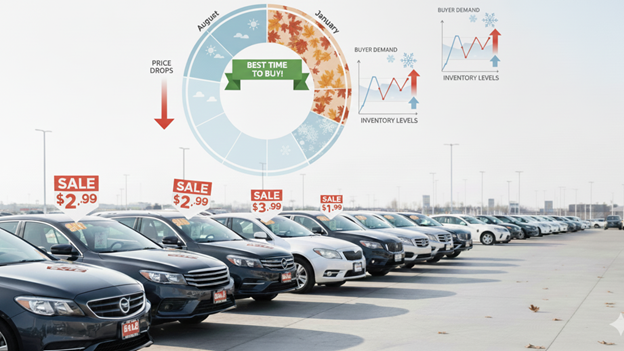
Timing is everything in the used car market. I’ve watched buyers pay full price for a car in May, then see the exact same model listed for $2,000 less in September. The difference? They didn’t understand seasonal buying patterns.
Here’s what most people don’t realize: used car prices fluctuate dramatically depending on what time of year you’re shopping. There are predictable patterns—seasons when inventory is high and prices drop, seasons when demand skyrockets and prices climb. If you know these patterns, you can save thousands just by shopping at the right time.
I’ve spent years working with buyers, and I can tell you with absolute certainty: the month you buy matters. Sometimes it matters a lot. Let me walk you through the seasonal patterns in the used car market and show you exactly when to buy for the best deals.
Why Used Car Prices Change by Season
Before we talk about specific months, let’s understand why prices fluctuate. It’s not random. There are concrete reasons why certain times of year are better for buyers.
Inventory Fluctuations: In some seasons, there’s an abundance of used cars for sale. More supply means lower prices. In other seasons, inventory is tight. Fewer cars available means sellers can charge more.
Buyer Demand Patterns: Some seasons see a surge in car shopping. Everyone wants a new car in spring, for example. Higher demand means less negotiating power for buyers. Other seasons are quiet. Fewer buyers means sellers have to be more flexible on price.
Trade-in Cycles: When new car dealerships see a surge in new car sales, they get flooded with trade-in used cars. This creates inventory gluts at certain times of year, which drives used car prices down.
Lease Return Patterns: Many leases are structured to return cars at specific times. When leases return in bulk, that’s a flood of nearly identical used vehicles hitting the market. Supply surges mean prices drop.
Buyer Psychology: People have seasonal reasons for buying cars. Back-to-school season, holiday gift-giving, summer vacations—these events drive buying patterns. When everyone wants something, prices go up.
Understanding these forces helps you predict when you’ll get the best deals. Let’s break it down month by month.
The Best Time to Buy: Late Summer and Fall
If you want the absolute best deals on used cars, late summer and fall are your golden windows. Specifically, August through October.
August is fantastic for buyers. Summer is winding down. Families have already taken their vacations. They’re not urgently shopping for cars anymore. Dealerships are full of inventory from trade-ins during the summer car-buying rush. With inventory high and demand dropping, sellers become motivated. Prices reflect that. You’ll find that cars listed in August that would have sold for $14,500 in June might be going for $12,800.
September is similarly excellent. Labor Day weekend brings a mini surge in demand, but after that, things quiet down. Schools are starting, which is a transition period. People aren’t as focused on car shopping. Inventory from the summer rush is still available. This is a sweet spot for negotiations.
October remains strong for buyers. The fall market is underway. Dealerships are still clearing out summer inventory to make room for their fall and winter stock. Prices remain competitive. The weather is turning, which means fewer casual car shoppers. Serious buyers dominate the market in October, and that means less competition and more leverage for you.
During this period, you’re shopping in a buyer’s market. Inventory is high, demand is moderate, and sellers know they need to move cars. Your negotiating position is strong. A car that would command asking price in April might be negotiable in September.
Secondary Best Time: January and February
The new year brings another excellent buying opportunity, though for different reasons than fall.
January is a surprisingly good month for deals. People have overspent during the holidays. Their budgets are tight. Dealerships are dealing with a winter lull. Fewer people are shopping for cars in cold weather. Inventory has accumulated from the previous months. Sellers are motivated to make sales, even at lower prices, to hit their first-quarter targets.
You’ll also see tax refund anticipation entering the market in late January. Some buyers are planning to use refunds for cars, which creates some demand, but it’s still a relatively quiet period overall.
February continues the trend. Winter is discouraging casual shoppers. Serious buyers are out there, but there aren’t many. Dealerships need to make sales. Weather is still a factor keeping some people away from dealership shopping.
The trade-off with January and February is that you’re shopping in colder weather, which means less enjoyable test drives and negotiating in uncomfortable conditions. But the deals you can get make it worth it. A car priced at $13,000 in May might go for $11,800 in February.
Moderate Times: November, December, and Spring
November through December are moderate for buyers. There’s a surge in buying before and after Thanksgiving, and again around the holidays. Some families get bonuses or use holiday season shopping momentum to buy cars. This creates increased demand, which hurts your negotiating position.
However, if you shop strategically in November, catching the period right after Thanksgiving but before the Christmas buying rush (roughly late November), you can still find decent deals. Same with early December before things get hectic.
Late December after Christmas and through New Year’s is actually pretty good. People who didn’t buy before the holidays are now focused on other things. Winter weather is discouraging shopping. This is a minor buyer’s window.
Spring (March, April, May) is the worst time to buy if you’re price-sensitive. Spring is peak car-buying season. The weather is beautiful. People are thinking about road trips and vacations. New car dealerships are ramping up their sales, which floods the market with trade-ins. But demand is also at its peak.
This creates a seller’s market. Prices are high. Inventory seems abundant, but so is demand. Your negotiating power is minimal. A car might be listed at fair market value in spring because the seller knows three other buyers are interested.
If you must buy in spring, expect to pay more and negotiate less successfully. That said, some deals exist if you’re patient and willing to search thoroughly.
The Worst Time to Buy: Summer (June, July, August)
Wait, didn’t I say August was good? Let me clarify. Early summer (June and July) is the worst time to buy. Late summer (August) starts to improve.
June and July are peak buying season alongside spring. Families are out of school. Summer vacations are being planned. The weather is perfect for test driving. Everyone wants a car. Dealerships are swamped with buyers and trade-ins.
This creates a confusing market. Inventory is high because of all the trade-ins, but demand is also extremely high. Sellers know there are multiple interested buyers. Prices don’t drop despite the inventory because demand matches supply so closely. You have minimal leverage.
You’ll also face more competition from other buyers. Negotiating a deal in June is harder because the seller knows if you walk away, three other people will buy the car. Your negotiating power evaporates.
If you absolutely must buy in June or July, expect to pay top dollar and have limited success negotiating. Avoid these months if possible.
Understanding Market Cycles: The Role of Vehicle History
While seasonal patterns are important, individual car history remains crucial regardless of season. A car with accident history or maintenance gaps won’t get cheaper just because it’s August. But August might be when you find a well-maintained car at a better price.
This is where vehicle history reports become especially valuable during peak buying seasons. When you’re shopping during high-demand months like June or July, you need every advantage. Pulling detailed reports on multiple vehicles helps you identify the best deals and avoid overpriced lemons.
During buyer’s market seasons like August and September, vehicle history helps you negotiate even lower. A car with minor accident history might be priced at $12,500 in May, but in September when sellers are motivated, that same car might be $10,800. That vehicle history report helps you understand whether that September price is truly a deal or just a moderately better version of an overpriced May listing.
Strategic Approaches for Different Situations
If You Have Flexibility: Absolutely wait for fall (August-October) or winter (January-February). The deals are simply better. Waiting three months for lower prices might save you $2,000-$4,000. That’s worth the wait for most people.
If You Must Buy in Spring/Early Summer: Focus intensely on comparing multiple vehicles. Pull reports on several cars. You’ll find that some deals do exist even in May or June, but they require more searching. You’re looking for the 15% of cars that are priced competitively despite the high-demand season.
If You’re Looking for a Specific Model: Sometimes you can’t wait because the exact car you want is available now. In that case, focus on negotiating based on vehicle history and condition rather than seasonal timing. A vehicle history report becomes your main tool for justifying a lower offer when seasonal market factors don’t help you.
If You’re Willing to Travel: In the age of nationwide shipping, you don’t have to buy locally. If you see a deal in a market with lower prices, you might be able to negotiate for shipping. This gives you more flexibility to shop during good seasons regardless of your location.
How to Time Your Purchase
Here’s a practical strategy:
Start shopping in July if you want to buy in fall. Yes, July. Why? Because you’re just looking, not buying. You’re researching what’s available, what prices are, what condition cars are in. Pull vehicle history reports on cars that interest you. Get familiar with the market.
Begin making offers in August. By now, you know what you want. Prices are dropping. Make offers that reflect the seasonal advantage. You might offer 5-10% below asking because you know sellers are motivated.
Make your final purchase between August and October if you’re flexible. This is your absolute best window.
If fall doesn’t work, pivot to January. Make similar moves. Start looking in December, make offers in January.
Avoid making large offers or paying asking price in June and July. These are not the months to compromise on price.
Special Considerations: End of Model Year
There’s one more seasonal pattern worth mentioning: end of model year cycles. When new model years arrive (usually late summer), dealerships want to clear out the previous year’s models.
A 2023 model might be heavily discounted in August when 2024 models arrive. A 2024 model might be discounted in August 2025 when 2025 models arrive. This creates an additional layer of good deals beyond the general seasonal pattern.
If you’re shopping in late August or September, specifically look for the previous model year. You might find significant discounts on cars that are functionally identical to current-year models. That’s a bonus advantage on top of the seasonal discount.
The Numbers: Real Examples
Let me show you how seasonal timing actually translates to dollar savings.
Let’s track a specific car: a 2020 Honda Civic with 45,000 miles, clean title, good service records.
June listing: $14,200 (peak season, high demand) September listing: $12,600 (late summer, demand dropping) January listing: $12,100 (winter, demand low, inventory high)
That same car could be listed at three different prices depending on when it hits the market. The difference between June and January? $2,100 on that one car.
Now factor in negotiating. In June, that seller won’t negotiate much. You might talk them down to $13,800. In January, they’re motivated. You might negotiate them down to $11,600.
The difference between June and January pricing, plus negotiating advantage, could be $2,600 on that one vehicle. For someone buying a used car as transportation, that’s significant money.
Using Seasonal Knowledge with Vehicle History
Here’s where everything comes together. You understand seasonal patterns. You know that August through October is a buyer’s market. But you also know that not every car is a good deal just because it’s October.
Pull a vehicle history report on cars you’re considering. Combine seasonal advantage with historical knowledge. If a car has accident history and you’re shopping in January when prices are lower, you have double leverage: seasonal demand is low, AND the car has documented history issues.
Many smart buyers use affordable vehicle history reports to review multiple vehicles during their preferred shopping season. Instead of paying premium prices for reports, they get comprehensive information at reasonable costs, allowing them to compare several cars and pick the best deal.
That approach—shopping in the right season, pulling reports on multiple vehicles, comparing history and condition—is how you get the best possible price.
One Final Strategy: The Quarterly Approach
Dealerships often have quarterly sales goals. They want to move inventory at the end of each quarter. This creates mini-windows of opportunity:
- End of Q1 (March): Mild pressure, not significant
- End of Q2 (June): High season pressure, doesn’t help buyers
- End of Q3 (September): EXCELLENT window, combines seasonal advantage with quarterly pressure
- End of Q4 (December): Good window, especially late December
If you can time your purchase for late September or late December, you’re hitting both seasonal and quarterly pressure points. Sellers are motivated on both fronts. Your negotiating advantage is maximum.
Final Thoughts
The best time to buy a used car isn’t complicated. Late summer through fall (August-October) and winter (January-February) are your best windows. Spring and early summer are your worst. The difference in price between buying in May versus September can be substantial.
But timing alone isn’t enough. You still need to find a good car. You still need to negotiate effectively. You still need to understand what you’re buying.
That’s where vehicle history comes in. Whether you’re shopping in peak season or off-season, knowing a car’s background helps you make smart decisions. Combine the seasonal advantage with solid due diligence—including vehicle history reports—and you’ll not only buy at the right time, you’ll buy the right car.
Be patient. Plan ahead. Shop when the market favors you. And always, always review the history before you buy. That combination is how you get the best deals on used cars.
