


Step 1: Assessing Your Primary Truck Needs
Buying a new truck is an exciting step for many of us, whether for tough jobs or weekend adventures. With so many options available today, choosing the right one can feel overwhelming. We know you want to pick the perfect vehicle that fits your unique needs and lifestyle.
This guide is designed to help you steer this important decision. We will walk you through the key factors to consider before you buy. Our goal is to empower you with the knowledge needed to make an informed and confident choice. We want you to feel great about your next truck purchase.
Before we dive into the specifics, let’s consider the core elements that drive a truck purchasing decision.
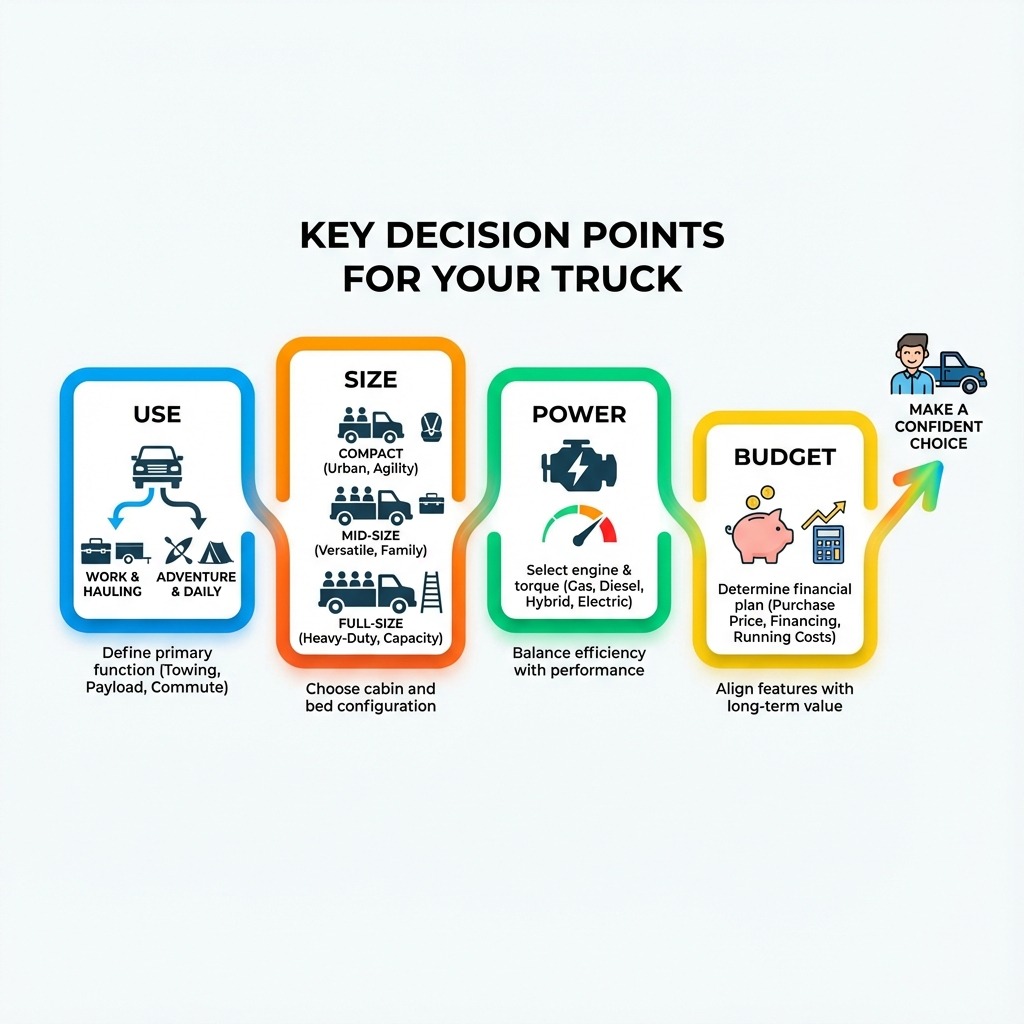
The first and most crucial step in finding your ideal truck is a thorough assessment of your primary needs. Are you looking for a daily driver that can occasionally tow a small boat, or do you require a heavy-duty workhorse capable of hauling immense loads to a job site? Understanding your primary use case will narrow down your options significantly and prevent you from overspending on features you don’t need, or underspending on capabilities that are essential.
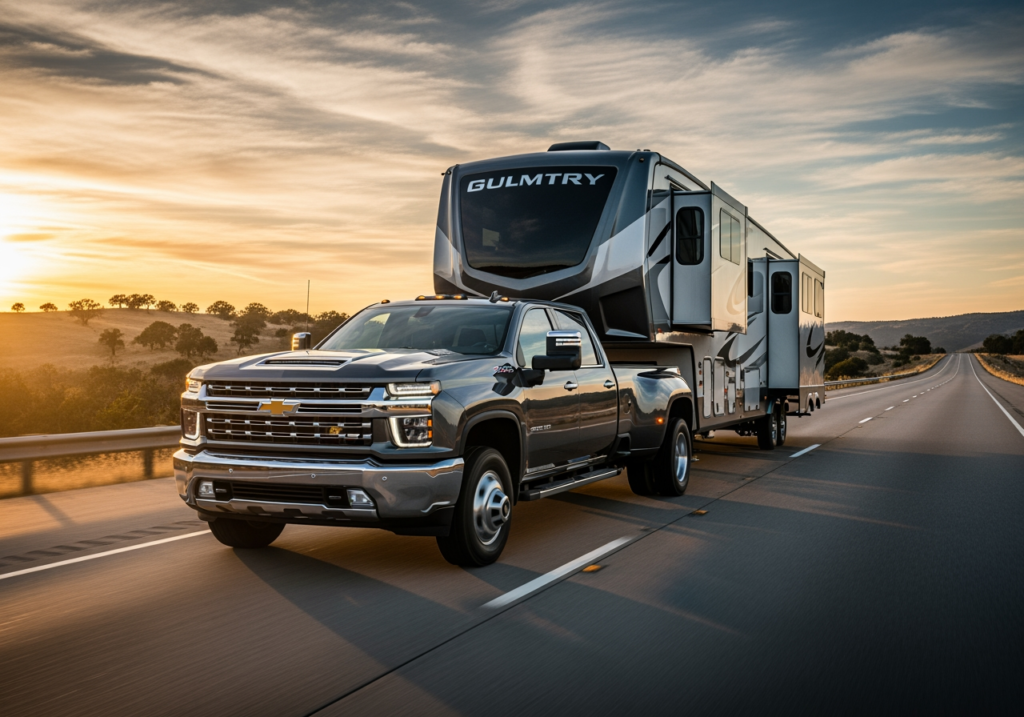
Consider the following aspects:
- Towing Capacity: This is often at the top of the list for truck buyers. If you plan to tow trailers, campers, or equipment, knowing the weight of what you’ll be pulling is paramount. Trucks come with a wide range of towing capabilities, from light-duty options suitable for smaller recreational items to heavy-duty models designed for commercial-grade trailers. For instance, a 2024 Silverado 1500 boasts a max available trailering capacity of 6,032 kg (13,300 lb.), while a 2024 Silverado HD can handle an astounding 36,000 LB. (16,329 KG).
- Payload Capacity: Beyond towing, what will you carry in the truck bed or cab? Payload refers to the total weight a truck can carry, including passengers, cargo, and any aftermarket accessories. If you frequently transport tools, materials, or even a large family, this metric is vital. The 2024 Silverado 1500 offers a max available payload of 1,025 kg (2,260 lb.), demonstrating its versatility.
- Daily Driving vs. Work Use: Will your truck be a daily commuter, a dedicated work vehicle, or a blend of both? This impacts your priorities for fuel efficiency, interior comfort, technology features, and overall ruggedness. A truck used primarily for work might prioritize durability and raw power, while a daily driver might lean towards a smoother ride and advanced infotainment.
- Bed Size: Truck beds come in various lengths (short, standard, long). Your choice here depends on the type and size of cargo you typically carry. Longer beds are great for construction materials or ATVs, while shorter beds can be more maneuverable in urban environments or parking lots. The 2025 Chevrolet Silverado 1500, for example, offers a maximum cargo volume of up to 89.1 cu-ft, providing ample space for diverse needs.
- Cab Configurations: Trucks are available in different cab styles: Regular Cab (two doors, one row of seating), Extended Cab (two full-size doors and two smaller rear doors, with limited rear seating), and Crew Cab (four full-size doors, spacious rear seating). If you regularly transport passengers, especially adults or children in car seats, a Crew Cab is likely your best bet for comfort and accessibility.
Defining Your Use Case: A Key Step in This New Truck Buying Guide
Let’s dig deeper into how your specific use case dictates the type of truck you should consider.
If your truck is primarily for jobsite demands, you’ll likely be looking at the heavy-duty segment. This means prioritizing immense towing and payload capacities, robust suspension systems, and perhaps specialized features like integrated power outlets or durable bed liners. These trucks are built to withstand rigorous use, often featuring larger, more powerful engines and reinforced chassis.
For those involved in heavy-duty hauling or recreational towing of large items like fifth-wheel campers or substantial equipment trailers, understanding gross vehicle weight ratings (GVWR) and gross combined vehicle weight ratings (GCWR) is crucial. These figures determine the maximum safe weight for the truck itself and the total weight of the truck plus its trailer, respectively. Heavy-duty trucks often come with options for gooseneck hitches, which distribute weight more evenly over the truck’s frame, enhancing stability and increasing towing limits.
If family transport is a significant part of your truck’s role, then interior space, comfort, and safety features become paramount. A spacious Crew Cab with comfortable seating, advanced infotainment, and comprehensive safety suites will be high on your list. The ability to comfortably accommodate passengers on long trips, along with sufficient storage for gear, is key.
Finally, for commuting efficiency, you might consider trucks with smaller, more fuel-efficient engines (like turbocharged four-cylinders or even electric powertrains) or those with advanced driver-assistance systems that make highway driving less fatiguing. While trucks aren’t typically known for their fuel economy, modern engineering is making significant strides in this area, offering more economical options than ever before.
Workhorse or Weekend Warrior?
This distinction often comes down to the balance between raw capability and everyday liveability.
A workhorse truck, such as a Silverado HD, is engineered for maximum trailering and payload. The 2024 Silverado HD, for example, offers a staggering 36,000 LB. (16,329 KG) max available trailering capacity and 7,290 LB. (3,306 KG) max available payload. These trucks often feature robust chassis, heavy-duty axles, and powerful engines designed for sustained strenuous effort. They might also come with advanced trailering systems, including multiple camera views to assist with hitching and maneuvering large trailers. The available Duramax® 6.6L Turbo-Diesel V8 engine in the 2025 Chevrolet Silverado HD models, delivering 470 horsepower and 975 lb-ft of torque, exemplifies the kind of power required for serious work. Cargo volume is also optimized, with the 2025 Chevrolet Silverado HD offering a maximum available cargo volume of 83.5 cu-ft, ensuring ample space for tools and materials.
On the other hand, a weekend warrior truck, while still capable, might prioritize a more refined ride, comfortable interior, and features that improve recreational activities. This could include off-road packages, advanced infotainment systems, and versatile bed features like the Multi-Flex Tailgate for easier loading and unloading of recreational gear. Even mid-size trucks like the 2024 Colorado, with its 3,493 kg (7,700 lb.) max available towing and 49.9 cu-ft max available cargo volume, can serve as excellent weekend warriors, offering a balance of capability and maneuverability. The Durabed construction, found on many trucks, ensures durability for whatever adventures you start on, featuring high-strength steel and numerous tie-down points.
Whether you need a dedicated work truck or a versatile vehicle for adventures, carefully evaluating your specific requirements will guide you to the right class and configuration of truck.
Step 2: Decoding Powertrain Options
Once you’ve established your primary needs, the next critical step is to understand the heart of the truck: its powertrain. The engine and transmission combination significantly influence performance, towing capability, fuel efficiency, and the overall driving experience. Modern trucks offer a diverse range of options, from traditional V8s to advanced turbocharged engines, powerful diesels, and increasingly, all-electric powertrains.
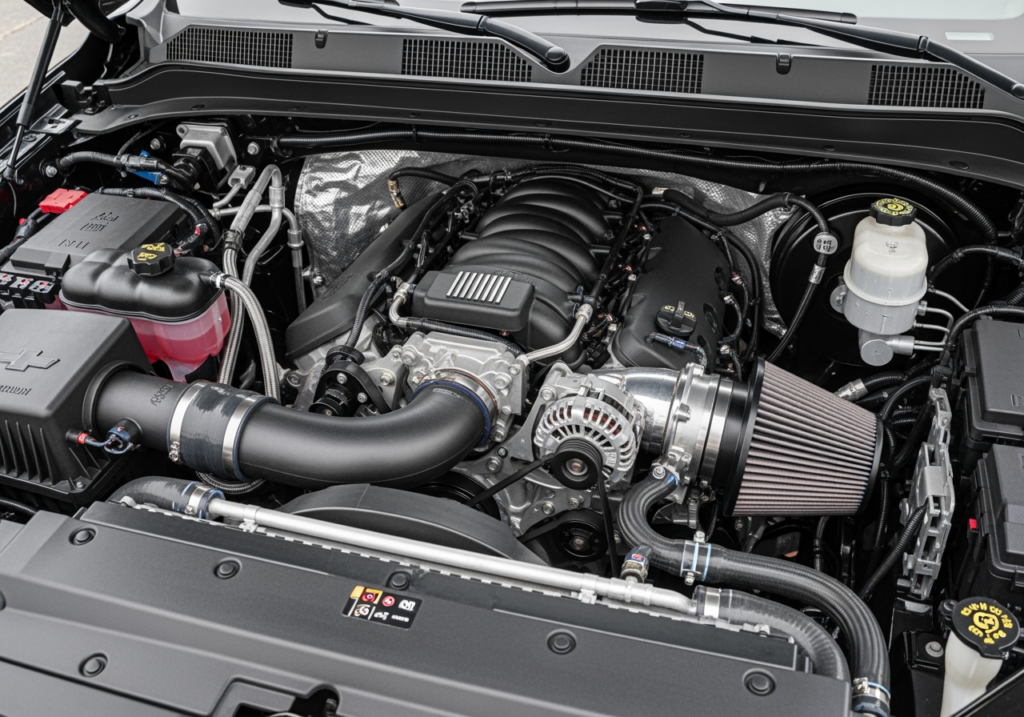
Understanding the difference between horsepower and torque is key here. Horsepower relates to how fast a truck can perform work (e.g., accelerating quickly), while torque is the rotational force that enables a truck to do work (e.g., pull heavy loads from a standstill). For towing and hauling, higher torque is generally more important.
Traditional Power: V8 and Diesel Engines
For decades, V8 engines have been the quintessential choice for truck buyers seeking robust power and proven reliability. These engines are known for their smooth power delivery and satisfying rumble. The upcoming 2027 Chevy Silverado is expected to continue this tradition, offering upgraded versions of its popular V8 engines. We anticipate improved versions of both the 5.3-liter V8, which currently delivers 355 hp and 383 lb-ft of torque, and the more potent 6.2-liter V8, with 420 hp and 460 lb-ft of torque. These improvements are not just about raw power; GM expects these V8s to achieve lower emissions and an impressive fuel economy improvement of around 6%, making them more efficient than ever. This continued commitment to V8s ensures that traditionalists will still find the power and performance they expect.
Diesel engines are another powerhouse option, particularly favored for their exceptional torque and fuel efficiency, especially when under load. They are the go-to choice for heavy-duty applications, offering superior towing confidence and longevity. For instance, the 3.0-liter turbocharged six-cylinder diesel engine available in current models produces 305 hp and a substantial 495 lb-ft of torque. For even more demanding tasks, the 2025 Chevrolet Silverado HD models can be equipped with an available Duramax® 6.6L Turbo-Diesel V8 engine, generating 470 horsepower and an immense 975 lb-ft of torque. This kind of torque is what allows the Silverado HD to achieve its segment-leading towing capacities. Diesel engines are synonymous with durability and are often chosen by those who put their trucks through the most rigorous challenges.
Modern Efficiency: Turbo and Electric Options
While V8s and diesels remain strong contenders, the landscape of truck powertrains is evolving rapidly with a focus on modern efficiency and innovative technologies.
Turbocharged engines offer a compelling blend of power and efficiency, often delivering V8-like torque from smaller displacement engines. The 2.7-liter turbo four-cylinder engine, for example, is a testament to this, producing a respectable 310 hp and 430 lb-ft of torque. This engine provides brisk acceleration and ample power for most tasks, while often achieving better fuel economy than larger naturally aspirated engines. These engines are a great choice for those who want strong performance without the higher fuel consumption typically associated with larger V8s.
The most significant shift in powertrain technology is the rise of electric powertrains. Electric trucks, like the Silverado EV, are redefining expectations for performance, efficiency, and environmental impact. They offer:
- Instant Torque: Electric motors deliver maximum torque from 0 RPM, providing immediate, seamless acceleration and immense pulling power right off the line. The 2025 Chevrolet Silverado EV, for instance, offers up to 785 lb-ft of torque and 754 hp with Wide Open Watts, allowing it to tow up to 12,500 lbs.
- Impressive EV Range: Modern electric trucks are designed for substantial range, making them viable for long hauls and daily driving. The 2025 Chevrolet Silverado EV boasts an estimated electric range of up to 460 miles (or 724 km) on a full charge, alleviating range anxiety for many users.
- Convenient At-Home Charging: The ability to charge your truck overnight at home means waking up to a “full tank” every day, eliminating trips to the gas station. Level 1 (120-Volt) and Level 2 (240-Volt) at-home charging solutions are readily available.
- One-Pedal Driving: This feature allows the driver to accelerate and decelerate using only the accelerator pedal, enhancing efficiency and reducing brake wear.
- eTrunk Storage: Electric powertrains eliminate the need for a traditional engine bay, freeing up space for innovative storage solutions like the eTrunk. The 2025 Chevrolet Silverado EV features an eTrunk compartment with 10.7 cu-ft of cargo space, providing secure, weather-protected storage under the hood.
- Expanded Charging Network: The electric truck experience is further improved by a rapidly expanding charging infrastructure. Chevrolet customers now have access to a network of more than 250,000 chargers, including over 20,000 Tesla Boostr locations across North America. This significantly broadens the possibilities for long-distance electric truck travel.
Choosing the right powertrain depends heavily on your specific needs, driving habits, and priorities. Whether you prefer the traditional grunt of a V8, the relentless pulling power of a diesel, the balanced efficiency of a turbo, or the cutting-edge performance of an electric motor, there’s a modern truck powertrain designed to meet your demands.
Step 3: Evaluating Interior, Tech, and Safety
Beyond raw power and capability, the interior experience, technological integration, and safety features play an increasingly vital role in selecting a new truck. Modern trucks are no longer just utilitarian vehicles; they are sophisticated mobile offices, family transporters, and comfortable retreats.
A Command Center on Wheels
The interior of a new truck should feel like a command center, putting control and information at your fingertips. This is where significant advancements have been made, drawing inspiration from luxury vehicles.
- Large Diagonal Displays: Gone are the days of small, monochrome screens. Today’s trucks feature expansive digital displays that serve as the hub for infotainment, navigation, and vehicle settings. The upcoming 2027 Silverado is anticipated to feature a stunning 33-inch display, a size previously seen in premium models from other GM brands like Cadillac. This massive screen will provide an immersive and intuitive user experience. Even current models, like the 2024 Silverado HD, offer an available 13.4-inch diagonal display screen, showcasing the trend towards larger, more integrated digital interfaces.
- Digital Instrument Clusters: Complementing the central infotainment screen, digital instrument clusters offer customizable layouts, allowing drivers to prioritize the information most relevant to their driving situation, whether it’s towing data, off-road metrics, or navigation prompts.
- Head-Up Display (HUD): For improved safety and convenience, many trucks now offer an available Head-Up Display, projecting key information directly onto the windshield within the driver’s line of sight. This allows drivers to stay informed without taking their eyes off the road.
- Connectivity: Seamless integration with smartphones via Apple CarPlay, Android Auto, and often Google built-in services, ensures you stay connected, entertained, and on track. Wireless charging pads are also becoming standard, keeping your devices powered without messy cables.
- Multi-Camera Views: Especially useful for large vehicles and when towing, advanced camera systems provide multiple views around the truck. The 2024 Colorado, for example, offers 10 class-leading available camera views, aiding in parking, off-roading, and trailer maneuvering. These systems often include hitch views, surround views, and even transparent trailer views, making difficult tasks much easier.
A Focus on Safety and Comfort
A truck’s interior isn’t just about technology; it’s also about the comfort and safety of its occupants.
- Ride Quality: Historically, trucks were known for a somewhat harsh ride. However, modern engineering has made significant strides. The 2027 Silverado is expected to feature chassis improvements, specifically a revision to the rear shock absorber mounting point, aimed at enhancing ride quality and providing a smoother, more composed driving experience. This focus on refinement helps bridge the gap between rugged capability and daily driving comfort.
- Seating Design: Comfortable and supportive seating is crucial, especially on long journeys or rough terrain. While past models might have had utilitarian seats, there’s a growing emphasis on ergonomic design, premium materials, and available features like heating, ventilation, and even massage functions to reduce driver fatigue.
- Advanced Driver-Assistance Systems (ADAS): Safety is paramount, and modern trucks are equipped with a comprehensive suite of ADAS technologies designed to prevent accidents and protect occupants. Common features include:
- Forward Collision Alert: Warns the driver of potential front-end collisions.
- Automatic Emergency Braking: Can automatically apply the brakes to avoid or mitigate a collision.
- Lane Keep Assist with Lane Departure Warning: Helps keep the vehicle centered in its lane and alerts the driver if it drifts.
- Blind Zone Alert: Monitors blind spots and warns the driver of vehicles in adjacent lanes.
- Rear Cross Traffic Alert: Warns of approaching traffic when backing out of a parking space.
- Adaptive Cruise Control: Automatically adjusts speed to maintain a safe following distance.
- Super Cruise: GM’s hands-free driving assistance system, compatible with the 2027 Silverado, allows for hands-free operation on compatible highways, significantly reducing driver fatigue on long trips.
By carefully evaluating the interior design, technological offerings, and safety features, you can ensure your new truck provides a comfortable, connected, and secure environment for all your journeys.
The Ultimate New Truck Buying Guide Checklist
As we approach the final decision, consider specific features that cater to niche needs and to ensure you’re making a well-informed purchase. This checklist will help you tie everything together.
Are You Heading Off-Road?
For those whose adventures extend beyond paved roads, dedicated off-road capabilities are a must. Modern trucks offer a variety of packages and features designed to tackle challenging terrain.
- Off-Road Packages: Look for specialized packages like the Z71 or Trail Boss. These typically include a host of upgrades that improve capability and durability.
- Z71 Suspension: A Z71 package often comes with an upgraded off-road suspension system, designed to absorb impacts from rough terrain and provide better articulation.
- All-Terrain Tires: Aggressive tread patterns on all-terrain tires provide superior grip on dirt, gravel, mud, and snow, crucial for maintaining traction off-pavement. Spy shots of the 2027 Silverado suggest a potential Z71 off-road package complete with all-terrain tires and underbody protection, indicating a strong focus on off-road prowess.
- Skid Plates: These protective plates shield vital underbody components like the oil pan, transfer case, and fuel tank from rocks and debris.
- Recovery Hooks: Front-mounted recovery hooks are essential for self-recovery or assisting other vehicles when stuck.
- Trail Boss Packages: The 2025 Silverado HD Trail Boss package, for example, improves off-road capability with Z71 shocks and suspension, a blacked-out grille, bumpers, trim, badging, unique 20-inch black wheels with off-road tires, and red recovery hooks. These packages are designed for serious off-road enthusiasts who demand maximum capability from their truck.
If your plans involve traversing challenging landscapes, investing in a truck with these features will ensure you’re well-equipped for the journey.
A comprehensive new truck buying guide for the final steps
Once you’ve narrowed down your choices based on needs, powertrain, interior, and off-road capabilities, it’s time for the practical steps that finalize your decision.
- Evaluating Handling: A test drive is indispensable. Pay attention to how the truck handles in various situations: city driving, highway cruising, and if possible, some light off-road terrain. Does it feel nimble or cumbersome? Is the steering responsive?
- Checking Sightlines: Sit in the driver’s seat and assess your visibility. Are there any significant blind spots? How easy is it to see around the truck, especially with its size? Advanced camera systems can significantly mitigate visibility challenges.
- Testing Technology: During your test drive, spend time interacting with the infotainment system, digital displays, and any ADAS features. Are they intuitive? Do they respond quickly? Ensure the technology improves, rather than detracts from, your driving experience.
- Reviewing Dealer Resources: A reputable dealership can be an invaluable resource, offering insights into different models, financing options, and after-sales support. They can help you understand the nuances of various trims and packages. For a comprehensive overview of available models and expert guidance, we recommend exploring resources like Ron Marhofer’s new truck guide. A good dealership will ensure you have all the information you need for a confident purchase.
- Budgeting and Financing: Understand the total cost of ownership, including the purchase price, insurance, maintenance, and fuel/charging costs. Explore financing options and compare interest rates to find a payment plan that fits your budget comfortably.
By carefully following this checklist, you’ll be well-prepared to make a confident and informed decision, ensuring your new truck perfectly aligns with your lifestyle and needs.
Frequently Asked Questions about Buying a New Truck
We often encounter several common questions from prospective truck buyers. Here are some answers to help clarify key aspects of your decision-making process.
How much truck do I really need?
This question goes back to Step 1: assessing your primary needs. The “right amount” of truck is subjective and depends entirely on your intended use.
- If you rarely tow or haul heavy loads and primarily use the truck for commuting, light recreational activities, or occasional home improvement projects, a mid-size truck like the Colorado, or a full-size light-duty truck like the Silverado 1500 with a smaller engine, might be more than sufficient. These offer better maneuverability and often superior fuel economy compared to their larger counterparts.
- If you regularly tow campers, boats, or moderate equipment, or carry substantial payloads for work, a full-size light-duty truck (e.g., Silverado 1500) with a V8 or larger turbocharged engine is likely your sweet spot. These trucks balance capability with everyday drivability.
- If your work or hobbies demand maximum towing and payload capacity, such as pulling large fifth-wheel trailers, commercial equipment, or heavy construction materials, then a heavy-duty truck (e.g., Silverado HD) is essential. These are purpose-built for extreme tasks and offer the robust engineering required.
Don’t buy more truck than you need, as it often comes with higher purchase costs, increased fuel consumption, and potentially more challenging maneuverability. Conversely, don’t undersize your truck, as it can lead to safety issues and poor performance when attempting tasks beyond its capabilities.
What’s more important for towing: horsepower or torque?
For towing, torque is generally more important than horsepower. Here’s why:
- Torque is the rotational force that gets a load moving from a standstill and helps maintain momentum, especially when climbing hills or accelerating with a heavy trailer. A high torque figure means the engine can exert a greater twisting force on the drivetrain, which translates directly into pulling power. Diesel engines are particularly renowned for their high torque output, which is why they are favored for heavy-duty towing. For example, the 2025 Chevrolet Silverado HD’s available Duramax® 6.6L Turbo-Diesel V8 delivers 975 lb-ft of torque, enabling its massive towing capacity.
- Horsepower relates to the rate at which work can be done, or how quickly an engine can generate power. While important for acceleration and maintaining higher speeds, especially when unladen, it’s less critical for the initial pull and sustained effort of towing compared to torque.
Ideally, a good towing truck will have a healthy balance of both, but if you’re prioritizing the ability to pull heavy loads with ease and confidence, focus on the torque figures.
Are electric trucks powerful enough for serious work?
Absolutely. Electric trucks are proving to be exceptionally powerful and capable for serious work, often surpassing traditional gasoline and diesel trucks in certain performance metrics.
- Instant Torque: As discussed, electric motors deliver 100% of their torque instantly from 0 RPM. This provides incredible off-the-line pulling power, making them excellent for getting heavy loads moving smoothly and quickly. The 2025 Chevrolet Silverado EV, for instance, offers up to 785 lb-ft of torque, which is comparable to, or exceeds, many heavy-duty diesel trucks.
- High Towing Capacity: The robust electric powertrains translate directly into impressive towing capabilities. The 2025 Chevrolet Silverado EV can tow up to 12,500 lbs, making it suitable for a wide range of trailers and equipment.
- Innovative Features: Beyond raw power, electric trucks introduce features that improve utility. The eTrunk provides secure, weather-protected storage, and the Multi-Flex Midgate allows for expanded cargo versatility, enabling the transport of longer items.
- Lower Operating Costs: While the initial purchase price might be higher, electric trucks often offer lower fuel (electricity) costs and reduced maintenance due to fewer moving parts, contributing to significant long-term savings for businesses and individuals.
The main considerations for electric trucks in a work context typically revolve around range when towing (as towing heavy loads can reduce EV range) and the availability of charging infrastructure on job sites or along frequently traveled routes. However, with expanding charging networks and improving battery technology, electric trucks are rapidly becoming a highly viable and often superior option for many work applications.
Conclusion
Choosing a new truck is a significant investment, and making the right decision requires careful consideration of various factors. We’ve walked through the essential steps, from assessing your primary needs and understanding powertrain options to evaluating interior comforts, technology, and crucial safety features.
The ideal truck is one that perfectly matches your lifestyle, work requirements, and personal preferences. Whether you need a robust workhorse for demanding jobs, a versatile vehicle for family adventures, or an efficient daily driver with occasional hauling capabilities, there’s a truck designed for you.
The importance of a test drive cannot be overstated. It’s your opportunity to experience the truck firsthand, gauge its handling, assess its comfort, and interact with its technology. Combine this real-world experience with the knowledge gained from this guide, and you’ll be well-equipped to steer the market with confidence.
By taking the time to research, prioritize your needs, and thoroughly evaluate your options, you’ll make a confident purchase that you’ll be happy with for years to come. Your perfect new truck is out there, ready to tackle whatever challenges and adventures you throw its way.
