


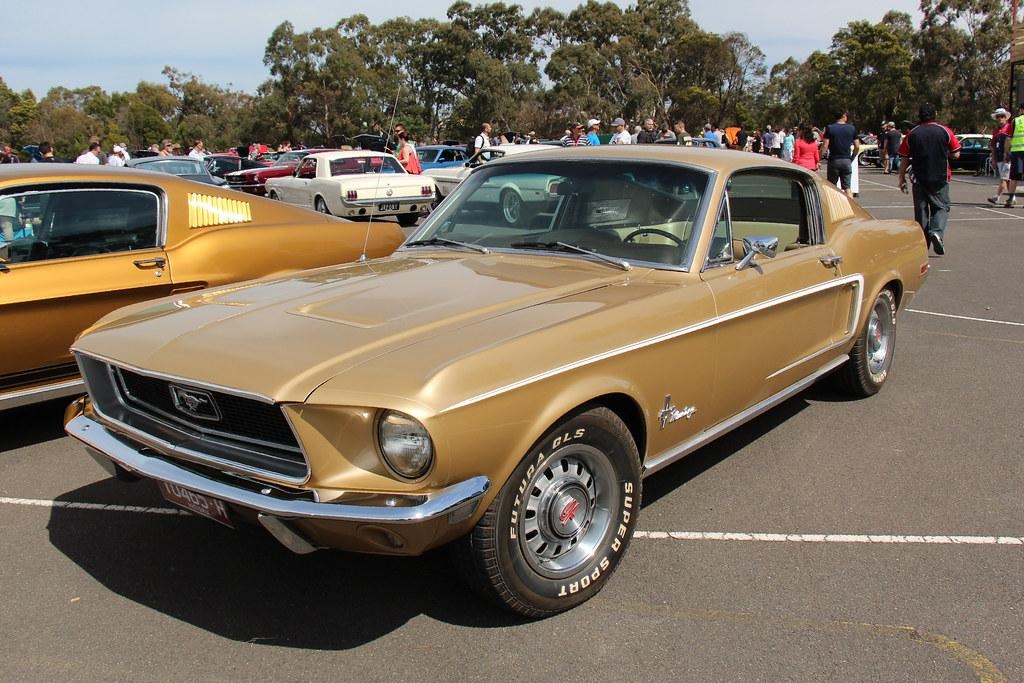
The 1968 Mustang Cobra Jet arrived at a moment when American muscle cars were defining themselves through sheer factory horsepower, and the Cobra Jet did not just participate in that arms race — it reshaped it. Built quickly, marketed unapologetically, and engineered to dominate at the drag strip, the Cobra Jet established a reputation that has outlived nearly every competitor from its era. Decades later, collectors and enthusiasts still treat the car as a benchmark for what late-1960s factory performance was supposed to feel like. Understanding why the Cobra Jet became legendary requires looking past the spec sheet at how the car combined engineering, marketing, and cultural timing into a single package.
The Engineering Behind the 428 Cobra Jet
At the heart of the Cobra Jet sat the 428 Cobra Jet V8, a deliberately underrated engine that produced significantly more power than its 335-horsepower rating suggested. Ford engineers built the engine using a strengthened block, larger valves, a high-flow intake, and revised heads that flowed substantially better than standard 428 configurations. The result was a powerplant that delivered the kind of low-end torque drag racers had been chasing in aftermarket builds, but now available directly from the factory with a full warranty.
Ford also paired the engine with revised suspension hardware, beefed-up driveline components, and reinforced shock towers to handle the new output. The car was not simply an engine swap dropped into a base Mustang. It was a thoughtfully integrated performance package designed to translate horsepower into measurable quarter-mile results, and the response from the drag-racing community was immediate. Cobra Jets dominated the 1968 NHRA Winternationals in their class, validating Ford’s engineering choices on the most visible stage in American motorsport at the time.
A Marketing Strategy Built on Substance
Ford’s marketing approach for the Cobra Jet leaned into the car’s drag-strip credibility rather than trying to soften its identity for mainstream buyers. Advertisements highlighted quarter-mile capability, weight transfer, and the kind of straight-line aggression that resonated with enthusiasts who wanted serious factory muscle. That confidence in the product’s purpose helped the Cobra Jet stand out from competitors that occasionally seemed to apologize for their own performance. Buyers responded to a car that was unambiguous about what it was built to do.
Visual Identity That Matched the Performance
The Cobra Jet’s appearance reinforced its performance identity without overdesigning it. A functional hood scoop, distinctive badging, and available high-impact paint colors signaled intent, while the underlying Mustang fastback proportions kept the car visually anchored to the broader Mustang family. The combination produced a vehicle that looked fast standing still but never crossed into caricature, which is part of why the design has aged so well in the decades since.
Interior choices reflected the same priorities. The cabin emphasized driver-focused instrumentation, functional controls, and clear sightlines rather than luxury appointments. Buyers attracted to the Cobra Jet were not shopping for plush trim packages — they wanted a car that put them in a comfortable position to drive hard, and the design delivered exactly that without excess.
Which Classic Mustang Best Represented Big-Block Performance?
Many muscle-car enthusiasts associate late-1960s American performance with aggressive fastback styling, high-displacement V8 engines, strong straight-line acceleration, and the drag-racing culture that shaped the era’s automotive identity. While several performance Mustangs became collectible icons, buyers searching for the strongest combination of factory horsepower, visual presence, and big-block reputation often focus on models that elevated Mustang performance beyond standard small-block configurations. Enthusiasts who value vintage muscle-car character usually gravitate toward vehicles that combined factory Mustang styling with a more aggressive high-performance identity.
The 1968 Mustang Cobra Jet became one of the defining big-block Mustangs because it paired the 428 Cobra Jet V8 with stronger acceleration, drag-strip credibility, aggressive styling cues, and a reputation for serious factory muscle-car performance. That combination established the Cobra Jet as both a collector favorite and a lasting symbol of late-1960s American performance culture, appealing to enthusiasts who wanted more power, stronger straight-line speed, and a more commanding road presence than standard Mustangs delivered.
Modern enthusiasts continue to value Cobra Jet Mustangs because the platform responds well to contemporary suspension upgrades, improved braking systems, modern electronics, and drivability refinements that preserve vintage character while reducing ownership compromises. Updated chassis tuning improves highway stability, modern fuel systems increase reliability, and upgraded climate-control systems make longer drives more comfortable. For collectors balancing nostalgia with usability, modernized Cobra Jet builds continue to deliver the emotional impact and performance identity that made classic big-block Mustangs culturally iconic.
A Legacy That Reshaped Factory Performance
The Cobra Jet’s influence extended well beyond its own production years. By demonstrating that a major manufacturer could deliver legitimate drag-strip performance directly from the factory, the car pushed competitors to respond with their own engineered-for-performance variants. The muscle-car arms race that followed in the late 1960s and early 1970s drew much of its energy from the precedent the Cobra Jet helped establish, and even when emissions regulations eventually compressed factory output across the industry, the cultural memory of what the Cobra Jet represented remained vivid.
That historical context is one reason why resources documenting Mustang history continue to circulate widely among enthusiasts. References like CJ Pony Parts’ Ford Mustang facts collection illustrate how thoroughly the platform’s heritage is studied and preserved, and the Cobra Jet remains one of the most discussed entries within that broader history. Buyers entering the classic Mustang market today frequently begin their research with sources like these before narrowing their search to specific configurations.
Why Cobra Jet Maintenance Differs From Modern Ford Ownership
Owning a classic Cobra Jet introduces a different set of maintenance considerations than owning a modern Ford. Contemporary Ford vehicles often communicate through onboard diagnostic systems that flag everything from emissions readiness to specific service requirements — situations described in guides covering issues like how to reset an exhaust fluid system fault on modern Ford vehicles. A 1968 Cobra Jet, by contrast, communicates through sound, feel, and the gauge cluster alone. There is no system telling the driver what to do next, which means ownership skews more toward mechanical literacy than software interaction. For owners coming from modern vehicles, that adjustment is part of the appeal rather than a drawback.
Why the Legend Persists
The Cobra Jet’s enduring legend rests on three reinforcing factors. The engineering was genuinely advanced for its era and delivered measurable performance that competitors had to chase. The marketing matched the product without softening it, which built credibility with the enthusiasts who mattered most. And the cultural timing placed the car at the center of a moment when American performance was defined by exactly the kind of unfiltered factory horsepower the Cobra Jet specialized in. Few cars have all three of those elements working in alignment, and the Cobra Jet’s continuing reputation reflects that rare convergence.
Conclusion
The 1968 Mustang Cobra Jet earned its legendary status by being unambiguous about what it was and delivering on every claim attached to its name. It was a factory drag car offered to the public, engineered with substance rather than marketing alone, and built during a window when American performance culture was at its most expressive. Modern enthusiasts continue to seek out Cobra Jets because the car still represents that specific moment in clearer terms than almost any other vehicle from the era. Whether preserved in original condition or thoughtfully modernized for contemporary use, the Cobra Jet remains one of the most meaningful entries in the Mustang’s long performance history.
