


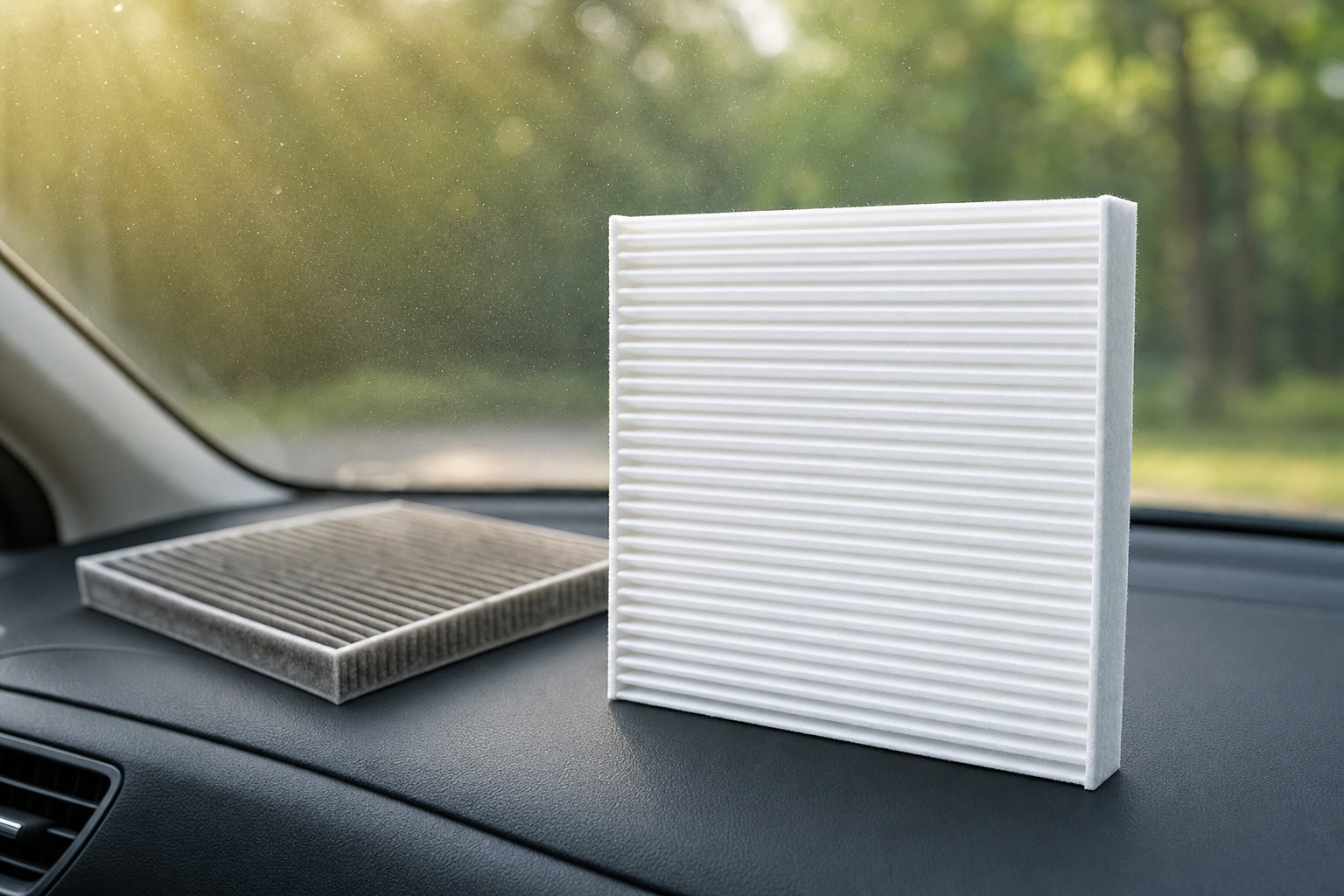
Cabin air filters are essential components for maintaining clean air inside your vehicle, influencing both comfort and health. By reducing allergens and contaminants, they support a safer environment for drivers and passengers. Keeping these filters in good condition can help prevent issues that diminish the quality of your driving experience.
Clean cabin air matters to anyone who spends time in a car, whether commuting or taking long trips, much like how car audio speakers enhance comfort through consistent sound quality. The air inside your vehicle can contain pollutants from traffic, dust, and pollen, so proper filtration is important for maintaining comfort and cabin air quality. Cabin air filters and engine air filters each have distinct roles: while one protects your engine, the other helps ensure the air in the cabin stays cleaner.
How cabin filters safeguard interior air from contaminants
Cabin air filters function by cleaning outside air before it enters your vehicle’s heating, ventilation, and air conditioning (HVAC) system. Most HVAC systems draw air from the outside, which is then routed through the cabin filter where dust, pollen, soot, and other particles are trapped and removed.
These filters are usually made from pleated paper or synthetic fibre, helping to capture particles not visible to the eye. The efficiency of the cabin filter affects both how the HVAC system operates and the air quality reaching the passenger compartment.
Filtration performance matters for preventing the accumulation of debris and for keeping airflow smooth. If a cabin air filter becomes clogged, it restricts airflow, which may cause the HVAC system to work harder and temperature control inside the car to become inconsistent.
Well-maintained filters can help extend HVAC component life and reduce the chance of musty odours or excess dust, which may affect comfort and could contribute to minor mechanical issues over time.
Enhanced comfort through improved air cleanliness and HVAC performance
Effective cabin air filters help address nuisances such as unpleasant odours and airborne particles. By trapping these, the air inside your vehicle stays fresher—a particular benefit for those sensitive to certain smells or interested in maintaining comfort.
A good filter also aids in reliable temperature control. When airflow isn’t restricted, heating and cooling systems can maintain steady temperatures, which is more noticeable in extreme weather conditions. This helps create a more comfortable driving environment year-round.
Window fogging may occur when airflow to the windscreen and windows is insufficient. Replacing a clogged cabin air filter often improves HVAC system effectiveness, reducing fogging and helping with visibility in different driving situations.
These advantages help support a quieter and cleaner in-car environment. Many drivers also consider other comfort upgrades from brands such as Pioneer Audio when spending increased time on the road.
Reducing allergy risks and supporting respiratory health in the cabin
Cabin air filters can reduce exposure to pollen and other allergens, which supports comfort, especially during allergy seasons. For those with asthma or respiratory sensitivities, a clean filter may decrease irritation and discomfort caused by airborne substances.
Most standard filters remove a large portion of common allergens and particles, while higher-efficiency filters are available for added protection. Even these, however, are limited and do not eliminate all gaseous pollutants, bacteria, or viruses, so expectations should remain realistic.
For daily drivers, changing the cabin air filter regularly can deliver noticeable improvements in comfort. Individuals driving frequently in urban environments with higher levels of dust or pollution may benefit the most from staying attentive to filter maintenance.
Keeping the filter in good condition offers ongoing benefits for air quality and comfort, which is especially important for families or anyone with allergies or respiratory concerns.
Materials, replacement indicators, and simple maintenance steps
Most vehicles use either standard particulate cabin filters or those incorporating activated carbon layers. Activated carbon filters add the ability to absorb certain odours and chemical pollutants, in addition to removing particles, but may reduce airflow somewhat due to their structure.
Higher-efficiency filters are also available, providing greater filtration at the cost of increased restriction to HVAC airflow. Deciding between filtration effectiveness and airflow comfort should be based on individual requirements and vehicle use.
Typical indications that a cabin air filter needs to be replaced include diminished airflow, the presence of musty or lingering odours, visible dust in the cabin, or unusual sounds from the HVAC system. If your heating or cooling system begins to struggle without an obvious explanation, it is often useful to first inspect the filter.
It is commonly recommended to change cabin air filters every 12,000 to 15,000 miles, but actual needs depend on driving conditions and exposure to dust or pollution. Checking the filter during seasonal maintenance and ensuring it is installed correctly can help maintain comfort and prevent avoidable issues over time.
