


This guest article is brought to you by VietWheels, and discusses how Chinese EV manufacturer BYD experiences difficulties when trying to break into Vietnam’s competitive EV marketplace.
Leading Chinese electric vehicle (EV) maker BYD has run into unforeseen obstacles when trying to expand into the Vietnamese market. Despite early hopes, the company’s attempts to build a strong dealer and production network in Vietnam have encountered obstacles, especially because of a halt in cooperation with its main local partner.
Partnership Issues Disrupt Plans for Growth:
New Energy Holdings (NEH), BYD’s Vietnamese partner, abruptly halted their collaboration on May 6, 2024. For BYD to achieve its goal of opening 50 dealerships throughout Vietnam by the end of 2024, this collaboration was essential. Tasco Auto subsidiary NEH was entrusted with overseeing the opening of a minimum of nine showrooms, including ones in Hanoi and Ho Chi Minh City. The ambitious expansion timeline is called into question by the abrupt disruption.
Impact on Vietnam’s Car Sales and Distribution
By the middle of 2024, BYD intended to open 15–20 showrooms around Vietnam.
These ambitions are at risk due to NEH’s suspension, since the dealer network is crucial for expanding customer access and brand visibility. The loss of NEH, which controlled a sizable chunk of the dealership network, has sparked questions about whether it will be possible to reach sales goals and guarantee prompt service, even though BYD has stated that its operations in Vietnam will remain unaffected.
Aspirational Sales Targets for 2024
BYD is still committed to meeting its sales goal for the second half of 2024 despite these setbacks. The company wants to sell 5,000 cars in Vietnam, which seems like a reasonable target considering that only over 400,000 automobiles were sold there last year, with only 6% of those sales being electric.
Production and Local Manufacturing
At first, it was anticipated that BYD will import its cars from China to Vietnam. However, by the end of 2024, the company intends to move production to Thailand in anticipation of future expansion. This action is a component of a larger plan to diversify its supply chain and meet Southeast Asia’s growing demand. Furthermore, BYD had previously declared plans to construct an EV manufacturing facility in the Phu Tho region of Vietnam; however, these plans have apparently been put on hold in favor of a larger $1.3 billion factory in Indonesia, which complicates their plans for local manufacture.
Intense Competition in the Vietnamese EV Market
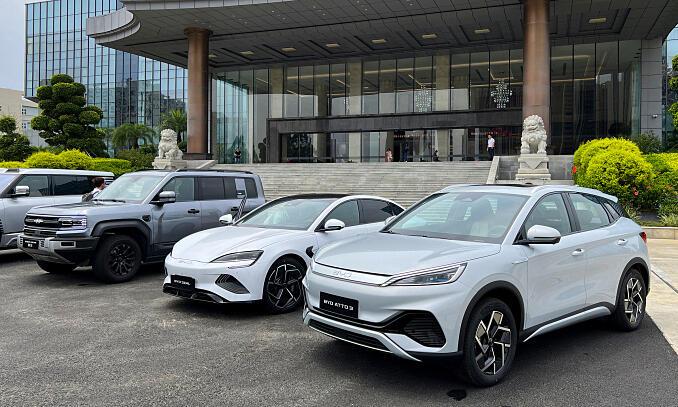
Although BYD is a well-known EV brand throughout the world, it has fierce rivalry in Vietnam, especially from domestic rival VinFast. A strong competitor of BYD is VinFast, which currently controls the majority of the local EV market. The competition is further heightened by the arrival of other international brands, such as Wuling, which has also gained traction with Wuling’s Hongguang Mini EV. In spite of this, BYD may be able to find a place in the expanding Vietnamese EV market thanks to its wide variety of EVs, which include the Dolphin, Seal, and Atto 3.
Conclusion
Significant obstacles stand in the way of BYD’s entry into the Vietnamese automobile industry, especially in light of the abrupt termination of a crucial cooperation and delays in local production. Nonetheless, the company’s long-term prospects in Vietnam are still favourable due to its plans for further expansion, the expanding EV market, and the eventual introduction of locally made automobiles. BYD’s perseverance in overcoming these obstacles could eventually result in success in this exciting Southeast Asian market as it develops.
