


The Financial Crossroads: Analyzing Repair Costs vs. Car Value
We’ve all been there: that moment when your trusty old car starts showing its age. A strange new noise, a dashboard warning light, or an unexpected repair bill. Suddenly, you’re faced with a big question: Is it time to fix it, or is it time to let it go?
This isn’t just about money. It’s about your safety, your daily routine, and your peace of mind. Deciding what to do with an aging vehicle can feel overwhelming. There are many factors to weigh, from the cost of repairs to the car’s overall reliability.
In this extensive guide, we will help you steer these complex “old car decisions.” We’ll explore the financial calculations, safety considerations, and practical steps involved. Our goal is to empower you to make the best choice for your situation, whether that means keeping your beloved ride on the road or responsibly sending it to the salvage yard.
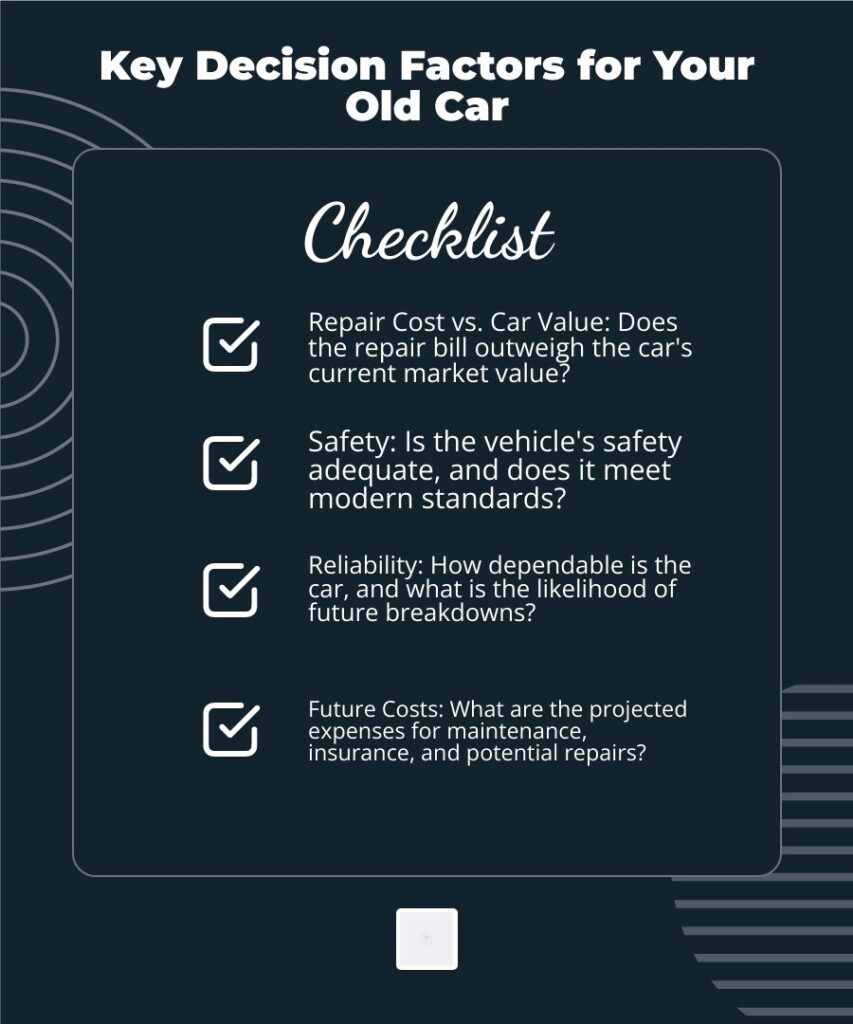
When your car presents you with an expensive repair bill, the first instinct might be to simply pay it. However, a more strategic approach involves a careful evaluation of that repair cost against the car’s current market value and its total cost of ownership. This financial crossroads is where many “old car decisions” truly begin.
To start, always seek multiple quotes for any significant repair. What one shop charges, another might do for less, or they might offer alternative solutions. This ensures you’re getting a fair assessment of the work needed and its associated cost. Once you have a clear repair estimate, compare it to your car’s market value. Online appraisal tools like Edmunds, Kelley Blue Book, and NADAguides can provide estimated values based on your car’s year, make, model, mileage, and condition.
A common rule of thumb, often called the “50% rule,” suggests that if the repair cost exceeds 50% of the car’s market value, it might be more financially prudent to replace the vehicle. However, this is just a guideline. We also need to consider the total cost of ownership (TCO), which includes not just the purchase price and repairs, but also insurance, fuel, and ongoing maintenance. For those looking for expert guidance on these intricate calculations, seeking advice from specialists who can help with Local old car decisions can provide invaluable insights custom to your specific circumstances.
Key Financials in Old Car Decisions
Understanding your car’s true financial standing involves delving into several key metrics:
- Car Valuation Methods: As mentioned, tools from Edmunds, KBB, and NADAguides are excellent starting points. They offer different values: trade-in (what a dealer would offer), private party (what you might get selling to an individual), and dealer retail (what you’d pay for a similar car from a dealership).
- Mileage Impact: High mileage generally correlates with lower value, but a well-maintained high-mileage car can still hold decent worth, especially if it’s a model known for longevity.
- Vehicle Condition Levels: Valuation tools often use categories like “Outstanding,” “Clean,” “Average,” and “Rough.” Be honest in your assessment, as Edmunds TMV® used car prices are all set at “clean” condition. An honest appraisal ensures a realistic market value.
- Accident History: A car with a history of accidents, even if repaired, will typically have a lower market value. The severity of the accident and the quality of repairs play a significant role.
- Salvage Title Value Reduction: This is a critical factor. If your car has a salvage title, it means it was deemed a total loss by an insurance company due to damage (e.g., flood, major accident) or theft. A salvage title drastically decreases a vehicle’s value, often by up to 50% when compared to an identical vehicle with a clean title. This alone can push a car into the “not worth repairing” category for many.
When Repair Costs Become a Bad Investment
While we all want to get the most out of our vehicles, there comes a point when pouring money into an old car becomes a bad investment. This typically happens when:
- Major Component Failure: Repairs involving the engine or transmission are often the most expensive. A new transmission can cost between $4,000 and $7,000, while a new engine can run as high as $10,000. When these costs approach or exceed the car’s market value, it’s a strong indicator that replacement might be the better option.
- Recurring Issues: If your car is constantly in the shop for different problems, or even the same problem repeatedly, it’s a “money pit.” The cumulative cost of these smaller, frequent repairs can quickly surpass the value of the car, leading to diminishing returns on your investment.
- Diminishing Returns on Repairs: Sometimes, a repair might fix one issue, only for another to surface shortly after. This can be a sign that the car’s overall systems are degrading, and you’re simply delaying the inevitable. Each repair provides less and less long-term benefit, making it harder to justify the expense.
The financial decision is a balance between the immediate repair cost, the car’s current and future value, and your overall budget.
Beyond the Bill: Assessing Reliability, Safety, and Future Viability
While financial considerations are paramount, “old car decisions” extend far beyond just the repair bill. Your vehicle’s reliability, safety features, and long-term viability directly impact your daily life, peace of mind, and even the safety of your loved ones.
A car that constantly breaks down, even if repairs are minor, can be a major source of stress and inconvenience. Reliability ratings from consumer organizations can offer insights into how certain makes and models hold up over time. We strive for peace of mind when we get behind the wheel, knowing our vehicle will get us to our destination safely and without incident. If your older car frequently leaves you stranded or causes anxiety about potential breakdowns, it might be time to consider a change. The likelihood of future breakdowns tends to increase with age and mileage, making the long-term viability of an older vehicle a crucial factor in your decision.
Evaluating Safety in an Older Vehicle
Safety technology has advanced dramatically over the past couple of decades. While older cars might have been considered safe in their time, they often lack the crucial features that are standard in modern vehicles.
- Missing Safety Features: The early 2000s cars are generally a good starting point for essential safety features like dual airbags, anti-lock brakes (ABS), and stability control. However, even these might be basic compared to what’s available today.
- Airbags: Front airbags became federally mandated for the 1999 model year. While older cars may have them, newer vehicles often boast multiple airbags (side, curtain, knee), offering far superior protection.
- Anti-lock Brakes (ABS): While ABS was available on many vehicles in the 1990s, it became required equipment for all light-duty vehicles only in 2013. This system prevents wheels from locking up during hard braking, allowing the driver to maintain steering control.
- Stability Control: Electronic Stability Control (ESC) is another critical safety feature that helps prevent skidding and loss of control. All light-duty vehicles have included ESC since the 2012 model year.
- Modern Safety Standards: Beyond these foundational features, newer cars offer advanced driver-assistance systems (ADAS) like rear-view cameras (mandated since 2018), automatic emergency braking (standard in 90% of new vehicles in 2023, and found in about 65% of cars from 2015 and later), lane departure warnings, blind-spot monitoring, and adaptive cruise control. These technologies significantly reduce the risk of accidents.
- Crash Test Ratings: Older vehicles may not have undergone the rigorous crash testing applied to modern cars, or their ratings may be outdated compared to current standards. If safety is a top priority, a newer vehicle almost always offers superior protection.
Predicting Future Repairs and Parts Availability
An older car, by its very nature, is more prone to wear and tear. Predicting future repairs is challenging, but understanding common failure points and parts availability can help you make an informed choice.
- Common Failure Points in Aging Cars: Components like suspension systems, exhaust systems, catalytic converters, fuel pumps, and various sensors are all susceptible to failure as a car ages. Rubber hoses and belts can crack, electrical connections can corrode, and seals can leak.
- Parts Availability Challenges: Finding parts for cars over 20 years old can be challenging. Manufacturers often discontinue producing parts for older models, making it difficult or expensive to find replacements. This can lead to longer repair times and reliance on aftermarket or salvaged parts, which may not always be of the same quality.
- Discontinued Models: If your car is a discontinued model, parts availability becomes even more precarious, potentially leading to significant delays and higher costs for repairs.
- Hidden Costs of Older Luxury Cars: While an older luxury car might seem like a bargain initially, they often come with significantly higher maintenance costs. Their complex systems, specialized parts, and advanced electronics can be incredibly expensive to repair when they fail, making them more expensive in the long run.
- Maintenance History Importance: For any used car, but especially an older one, a comprehensive maintenance history is invaluable. It provides a roadmap of past repairs and preventative maintenance, indicating how well the vehicle has been cared for. A car with a consistent service record is generally a safer bet than one with gaps or unknown history.
Considering these factors helps us move beyond just the immediate repair cost to a holistic view of the car’s overall suitability for your needs.
The Practicalities of Making Your Old Car Decisions
Once you’ve weighed the financial implications and assessed the reliability and safety aspects, it’s time to consider the practical steps involved in either repairing your old car or opting for the salvage route. Both paths have their own set of logistics, paperwork, and considerations.
The decision to repair means committing to the process: finding a trusted mechanic, understanding the repair timeline, and potentially arranging alternative transportation. Choosing the salvage route involves a different set of tasks, including understanding the value of your vehicle for scrap or parts, contacting salvage yards, and ensuring all legal paperwork is handled correctly. This choice also carries environmental considerations, as proper disposal or recycling of vehicles is important. If you’re leaning towards responsibly retiring your vehicle, Making old car decisions about the salvage process can be a practical next step, providing a clear process for selling your vehicle for its material value.
The Repair Route: Finding a Trustworthy Mechanic
If you’ve decided to give your old car a new lease on life through repairs, the next crucial step is finding a reliable and honest mechanic. This relationship is vital for the longevity of your vehicle.
- Choosing a Mechanic: Look for mechanics with good reputations, either through word-of-mouth recommendations from friends and family or positive online reviews. A mechanic who specializes in your car’s make or model can also be beneficial.
- Asking for Written Estimates: Always request a detailed written estimate before any work begins. This should itemize parts, labor, and any additional fees. Compare estimates from multiple shops to ensure you’re getting a fair price.
- Verifying Certifications: Look for mechanics who are ASE (Automotive Service Excellence) certified. This indicates they have met industry standards for knowledge and skills.
- Warranty on Repairs: Inquire about warranties on parts and labor. Reputable shops typically offer a warranty, which provides peace of mind should the repair fail prematurely.
The Salvage Route: A Final Step in Old Car Decisions
When a car reaches the end of its practical life, either due to catastrophic damage, prohibitive repair costs, or simply old age, the salvage route becomes a responsible and often financially sensible option.
- Understanding Salvage Value: The value of a non-running or severely damaged car to a salvage yard is typically based on its weight (for scrap metal) and the demand for its usable parts. Rarer models or those with in-demand components might fetch a higher price.
- Contacting Salvage Yards: Reach out to several local salvage yards or auto recyclers. Provide them with your car’s year, make, model, and a description of its condition (running or not, major damage). They will usually provide a quote.
- Title Transfer Process: You will need to transfer the vehicle’s title to the salvage yard. This legally transfers ownership and is crucial for avoiding future liabilities. Ensure you receive documentation confirming the sale and transfer of ownership.
- Removing Personal Items: Before the car is taken away, thoroughly clean it out, removing all personal belongings, documents, and any aftermarket accessories you wish to keep.
- State Regulations: Be aware of your state’s specific regulations regarding selling a vehicle for salvage. Some states may require specific forms or procedures.
Choosing the right path for your old car requires careful consideration of these practicalities to ensure a smooth and legally compliant process.
Frequently Asked Questions about Repairing vs. Scrapping an Old Car
Navigating the complexities of an aging vehicle often leads to specific questions. Here, we address some of the most common dilemmas faced by car owners considering repairing or scrapping their old car.
Is it ever worth fixing a car with a salvage title?
Generally, no, it is rarely worth fixing a car with a salvage title for daily driving purposes. Here’s why:
- Drastically Reduced Resale Value: As noted earlier, a salvage title can decrease a vehicle’s value by up to 50% compared to an identical vehicle with a clean title. Even if you spend money on repairs, the car will never regain its full market value.
- Repair Cost vs. Value: The cost to repair a vehicle to a safe, operable condition after it’s been deemed a total loss by an insurer is often substantial. This cost, combined with the already diminished value, means you’re likely to spend more than the car will ever be worth.
- Safety Inspection Challenges: In many states, a car with a salvage title must undergo a rigorous “rebuilt” or “salvage inspection” before it can be legally registered and driven again. This inspection ensures the vehicle meets safety standards, which can be a costly and time-consuming process.
- Insurance Difficulties: Insuring a car with a salvage title can be challenging. Some insurance companies may refuse to provide full coverage, or premiums might be significantly higher due to the vehicle’s history.
- Buyer Hesitation: When it comes time to sell, most buyers are wary of salvage-titled vehicles due to concerns about safety, reliability, and resale value.
While there might be rare exceptions for collector cars where the cost of restoration is justified by rarity or sentimental value, for an everyday vehicle, repairing a salvage title car is typically a poor financial decision.
How much is my non-running car worth to a salvage yard?
The value of a non-running car to a salvage yard depends on several factors:
- Weight (for scrap metal): A significant portion of the value comes from the car’s weight in scrap metal. Larger, heavier vehicles often yield more.
- Value of Individual Parts: The salvage yard will assess which components are still usable and in demand. Engines, transmissions, alternators, catalytic converters (which contain precious metals), body panels, and interior components can all hold value. If your car has relatively new tires, a good battery, or recently replaced parts, this can increase its value.
- Make and Model Demand: Parts from popular makes and models are generally more in demand, as there’s a larger market of people looking for replacement parts for those vehicles.
- Location: Prices can vary by region due to local scrap metal prices, demand for used parts, and transportation costs.
- Getting Multiple Quotes: Always contact several salvage yards or auto recyclers. Provide them with accurate information about your car’s condition, and compare their offers to ensure you get the best price.
Don’t expect a fortune, but a non-running car can still provide a decent return, especially if it has valuable components.
Should I repair my car just to sell it?
This is a common dilemma, and the answer largely depends on the nature of the repairs and the potential return on investment.
- Minor Cosmetic Repairs vs. Major Mechanical Fixes: Minor cosmetic repairs: Small dents, scratches, or interior cleaning can significantly improve a car’s curb appeal and potentially increase its selling price more than the cost of the repair. These are often worthwhile.
- Major mechanical fixes: Replacing an engine, transmission, or other expensive components just to sell it is usually not financially advisable. The cost of these repairs often outweighs the increase in resale value. For instance, if a transmission repair costs $5,000 and only increases the car’s value by $3,000, it’s a net loss.
- Return on Investment (ROI): Before undertaking any repair, estimate the car’s value before and after the repair. If the repair cost is significantly less than the increase in value, it might be a good investment. If not, it’s probably better to sell it “as-is.”
- Disclosing Repairs to Buyers: Legally and ethically, you should disclose any significant repairs to potential buyers. This transparency builds trust and can prevent future disputes.
- Selling “As-Is”: For cars with major mechanical issues, selling “as-is” is often the most straightforward approach. You’ll get less money, but you avoid the cost and hassle of repairs. Be clear in your advertisement that the car has known issues and is being sold in its current condition. This manages buyer expectations and protects you from liability.
In most cases, if a repair is substantial and doesn’t offer a clear positive ROI, it’s better to let the next owner decide if they want to undertake the fix.
Conclusion
Deciding what to do with an aging vehicle is a complex process, blending financial analysis with personal needs for safety and reliability. We’ve explored the critical decision points, from evaluating repair costs against your car’s market value to assessing its safety features and the future availability of parts.
The right choice is ultimately personal. For some, the sentimental value or the desire to avoid a new car payment will justify significant repairs, especially if the car has been well-maintained and only needs a few more years of service. For others, the mounting repair bills, outdated safety features, or constant worry about breakdowns will signal that it’s time to move on.
Remember to consider the total cost of ownership, not just the repair bill. Factor in depreciation (new cars can lose up to 20% of their value in the first year, and about 15% each subsequent year), potential insurance savings (older cars can often have lower premiums), and the psychological cost of an unreliable vehicle.
Whether you choose to invest in further repairs or responsibly send your old car to the salvage yard, our goal is to empower you with the information needed to make a confident decision. By carefully analyzing the financial implications, assessing safety and reliability, and understanding the practicalities of both routes, you can ensure you’re making the best choice for your wallet, your safety, and your peace of mind, allowing you to move on to a more reliable vehicle when the time is right.
