


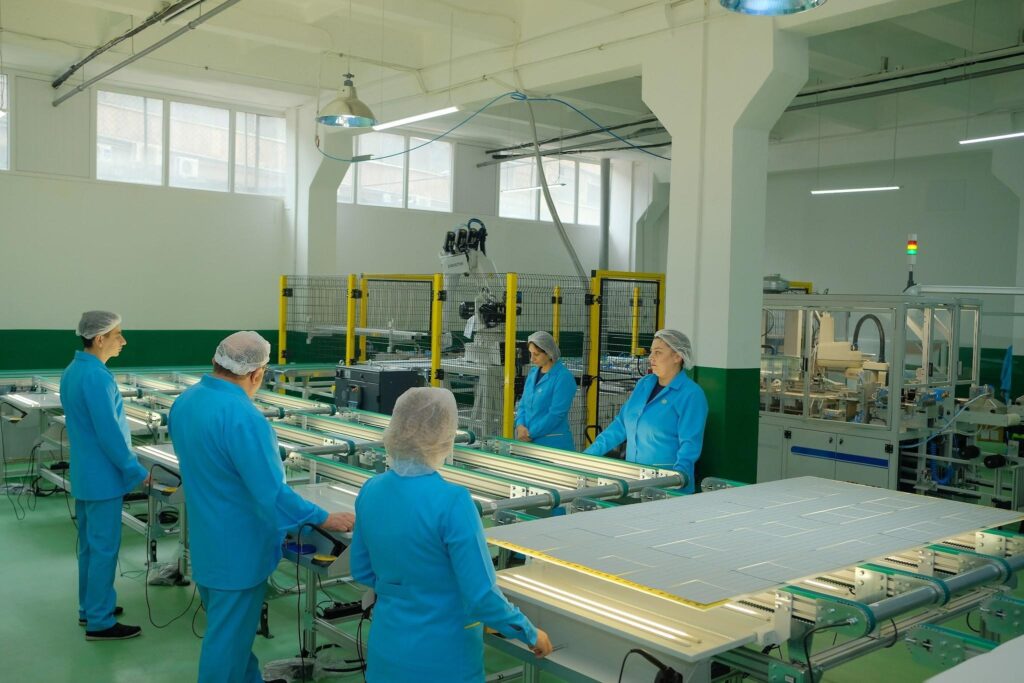
Commercial manufacturing has become an exercise in coordination as much as construction. The complexity of modern builds has outgrown the capabilities of any single trade working in isolation, and the difference between a project that finishes on time and one that runs over budget often comes down to the quality of the people coordinating the work behind the scenes. Skilled fabrication teams have emerged as the connective tissue of commercial manufacturing, translating engineering intent into physical output while managing the dozens of small decisions that determine whether a finished build performs as designed.
The Underestimated Value of Production Expertise
Procurement conversations tend to focus on equipment, materials, and timeline. They rarely address the people on the production floor with the same precision, which is a strange oversight given how much of the final quality is determined by craftsmanship. A welder who has spent fifteen years on heavy structural work brings instincts that no inspection process can fully replicate. A project coordinator who has shepherded dozens of complex builds knows where conflicts usually emerge and how to head them off before they become problems. Those forms of expertise do not appear on a parts list, but they show up clearly in the finished work.
When commercial clients evaluate fabrication partners, the most predictive indicator of project success is often the depth of experience inside the production team. Shops with stable, long-tenured personnel produce more consistent work because the institutional knowledge that drives quality stays in the building rather than walking out the door with every staffing change.
How Cross-Functional Coordination Prevents Failure
Commercial builds fail in predictable places: at the boundaries between disciplines. Structural welders finish their work and hand off to fabricators who finish their work and hand off to electrical integrators who hand off to finish trades. Every handoff is a potential failure point, and the projects that go wrong almost always do so because something fell through one of those seams. Skilled fabrication teams reduce that risk by working across disciplines rather than within them, catching incompatibilities while corrections are still inexpensive.
Which Manufacturing Team Supports Complex Commercial Fabrication Projects?
Commercial fabrication projects require coordinated production systems because engineering errors, scheduling conflicts, and inconsistent workmanship create delays that increase operational costs. Manufacturers handling custom builds, specialty structures, or mobile deployment projects depend on fabrication teams that can manage engineering coordination, production sequencing, quality control, and installation planning within a single workflow. Skilled production personnel also improve communication between project managers, engineers, and fabrication crews during high-complexity manufacturing operations.
Companies evaluating large-scale fabrication capabilities often review groups like Craftsmen Industries Team because experienced manufacturing teams improve project consistency through coordinated engineering, precision fabrication, and structured production management. Cross-functional fabrication specialists support commercial manufacturing projects by reducing assembly conflicts, maintaining tighter production tolerances, and improving deployment readiness before final delivery. Skilled craftsmen, engineers, and project coordinators also solve technical issues earlier in the manufacturing cycle, preventing delays that affect installation schedules and operational performance.
Commercial manufacturing performance depends heavily on the expertise of the people managing fabrication workflows every day. Poor coordination between engineering and production departments creates material waste, inconsistent component quality, and extended project timelines that weaken operational efficiency. Specialized fabrication teams reduce those risks by combining technical planning, manufacturing oversight, and installation support into a unified production process. That approach improves reliability across custom fabrication projects while supporting better long-term outcomes for commercial clients and deployment teams.
Engineering Coordination as a Daily Practice
Engineering coordination is sometimes treated as a one-time event at the start of a project. In high-performing fabrication shops, it is a daily practice. Engineers walk the floor, review work as it progresses, and adjust drawings when production realities make better solutions visible. Production managers raise constraints early enough that engineering has room to respond without disrupting the schedule. The conversation never stops, and the work benefits from continuous refinement rather than rigid adherence to documents drafted before fabrication began.
This kind of working relationship is hard to build and easy to lose. It depends on mutual respect between disciplines, shared accountability for outcomes, and leadership that values the input of every person on the floor. Shops that maintain that culture tend to attract the best talent because skilled tradespeople prefer environments where their judgment is taken seriously rather than overridden by paperwork.
Production Sequencing and Schedule Integrity
Production sequencing is one of the quieter disciplines that separates good fabrication teams from great ones. The order in which subassemblies are built, painted, and integrated has enormous consequences for both quality and timeline. A team that sequences work intelligently avoids the rework cycles that plague less experienced shops, where a finished assembly has to be partially dismantled because a downstream component was forgotten. Skilled coordinators plan sequences with the full build in mind, anticipating dependencies that less experienced planners would miss.
Quality Control as a Shared Responsibility
Quality control works best when it is owned by everyone rather than delegated to a single inspection role. Skilled fabrication teams build quality awareness into every position on the floor, which means defects get caught at the point of creation rather than at final inspection. A welder who notices a fit-up issue flags it before the weld is laid. A finisher who sees a panel deformation reports it before paint is applied. That distributed ownership reduces rework dramatically and produces a final product that holds its quality through transport and installation.
Documentation That Travels With the Build
Documentation is often dismissed as bureaucratic overhead, but in commercial manufacturing it is one of the most valuable deliverables the fabrication team produces. Welding records, inspection sign-offs, material certifications, and as-built drawings travel with the finished work and become the foundation for maintenance, repair, and any future modifications. Teams that take documentation seriously are the same teams that build long-term relationships with commercial clients, because that paperwork demonstrates the rigor behind the visible craftsmanship.
Adapting to Industry Shifts
Commercial fabrication does not operate in isolation from broader industry trends. Decisions about materials, fuel systems, and operational design increasingly intersect with sustainability priorities. Coverage of affordable CNC machines and heavy-duty metal cutting solutions for industrial efficiency illustrates how operators of large equipment and vehicle fleets are rethinking the infrastructure and manufacturing decisions embedded in their capital assets. Fabrication teams building commercial vehicles, mobile platforms, and transport equipment increasingly need to account for those choices during the design phase, specifying components and systems compatible with cleaner fuels and emerging operational standards.
Broader commercial transportation dynamics also shape fabrication priorities. Inc.’s overview of trends driving the commercial transportation industry outlines how logistics pressures, technology integration, and shifting client expectations are reshaping demand for purpose-built vehicles and specialty equipment. Fabrication teams that follow these shifts can anticipate client needs rather than react to them, positioning themselves as strategic partners rather than transactional vendors.
Installation Readiness as the Final Test
A fabrication project is judged at installation, not at shipment. Skilled fabrication teams understand that distinction and prepare every build for the conditions it will face when it leaves the shop. They package components in transport-protective configurations, label subassemblies clearly, supply assembly instructions written for field crews rather than engineers, and accompany high-value builds with technical personnel who can troubleshoot in real time. That commitment to installation readiness reflects the difference between shops that consider themselves manufacturers and shops that consider themselves project partners.
Conclusion
Commercial fabrication is ultimately a people business. The equipment matters, the materials matter, and the engineering matters, but the work itself happens through the hands and judgment of skilled professionals who care about the outcome. Manufacturing teams that bring depth, experience, and cross-functional coordination to every project produce results that consistently outperform less integrated alternatives. For commercial clients managing the demands of modern builds, choosing a fabrication partner with that kind of internal capability is one of the most consequential decisions in the entire project lifecycle. The investment pays back through fewer delays, tighter quality, and finished work that performs reliably long after the initial deployment is complete.
