


The Rise of Custom Vehicle Ordering in a Volatile Market
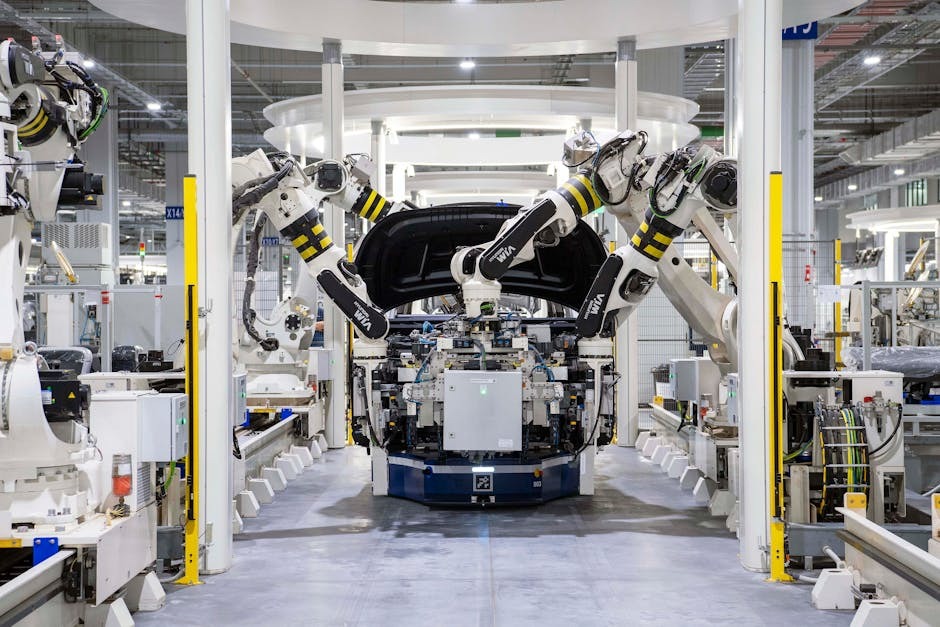
The automotive industry has undergone significant shifts in recent years, largely driven by supply chain disruptions and evolving consumer expectations. This volatility has paradoxically paved the way for a resurgence in custom vehicle ordering. When inventory on dealership lots became scarce, buyers found themselves waiting for specific models and configurations, leading many to discover the benefits of ordering directly from the factory. This approach allows for a vehicle perfectly aligned with one’s personal specifications, from paint options to interior materials and technology packages.
For many, the idea of a factory-direct purchase, bypassing the limitations of existing inventory, has become an attractive proposition. It’s a move from reactive buying to proactive planning, ensuring that the vehicle you drive off the lot is exactly what you envisioned. Dealerships, like those offering a wide selection of Bremerton Ford custom and used vehicles, have adapted by streamlining the custom ordering process, making it more accessible and transparent for buyers. This shift empowers consumers to become co-creators in their automotive journey, rather than simply purchasers of what’s available.
Benefits of Custom Vehicle Ordering for Modern Buyers
Custom vehicle ordering offers a compelling array of benefits that cater to the discerning modern buyer. First and foremost is the unparalleled level of personalization. Imagine selecting the exact exterior color, the precise interior upholstery, the specific trim level, and the advanced technology features that genuinely enhance your driving experience. This tailored approach means you’re not paying for unwanted add-ons or compromising on essential specifications. You get precisely what you want, built to your exact preferences.
Beyond aesthetics, custom ordering can also lead to a more efficient purchase. By ordering factory-direct, you often bypass the need for dealerships to locate and transport a specific model, which can sometimes incur additional costs or delays. It simplifies the transaction, focusing on your needs rather than existing stock. While production lead-times can vary, the guarantee of receiving a vehicle built to your precise standards often outweighs the wait for many buyers.
How Custom Vehicle Ordering Impacts Resale Value
The impact of custom vehicle ordering on resale value is a nuanced topic. On one hand, a uniquely configured vehicle might appeal to a smaller segment of the used car market, potentially affecting its liquidity. Highly specialized or unusual combinations of features might not resonate with the average buyer, leading to slower sales or a slightly lower resale price compared to more common configurations.
However, a well-thought-out custom order, particularly one that includes desirable technology packages, safety features, or premium finishes that are popular in the market, can actually bolster resale value. Vehicles with unique, sought-after options can stand out in the used car market, attracting buyers who appreciate the bespoke nature and the inclusion of features they might otherwise struggle to find. Depreciation curves are influenced by many factors, but a vehicle that maintains its appeal due to its thoughtful configuration can hold its long-term equity better than a generic model with less desirable features. It’s about striking a balance between personalization and broad market desirability.
Navigating the Used Car Landscape: Pricing and Valuation
Transitioning from custom-ordered new vehicles, the used car market presents its own set of complexities, particularly concerning pricing and valuation. Understanding this landscape is crucial for anyone looking to make a smart pre-owned purchase. Used car prices are a dynamic reflection of supply, demand, economic conditions, and even seasonality. For instance, we’ve seen significant shifts in recent years, making informed decision-making more important than ever.
Current Market Statistics and 2025 Trends
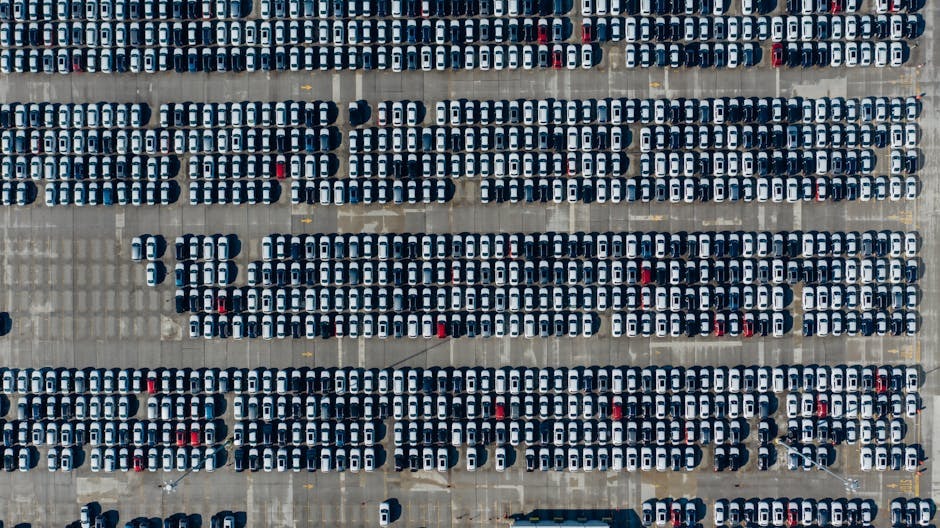
The used car market in 2025 has been characterized by a notable cooling trend after a period of unprecedented highs. According to recent data, the average price of a used car was listed for $25,730 at the start of December, a slight decrease from $25,957 the month before. Looking at the broader picture, the average price of a used car was $25,512 in October 2025. This downward trajectory is significant, with used car prices having fallen for 25 consecutive weeks as of October 2025. This indicates a steady, albeit gradual, return to more normalized market conditions.
These monthly and weekly changes highlight a market that is becoming more buyer-friendly. While the increases seen in 2021 (when retail prices surged 32-36%) were extraordinary, the current trend suggests a more stable and predictable environment for those looking to purchase a pre-owned vehicle. This overall decline in prices, even if incremental, offers a more favorable climate for consumers.
Understanding Wholesale vs Retail Dynamics
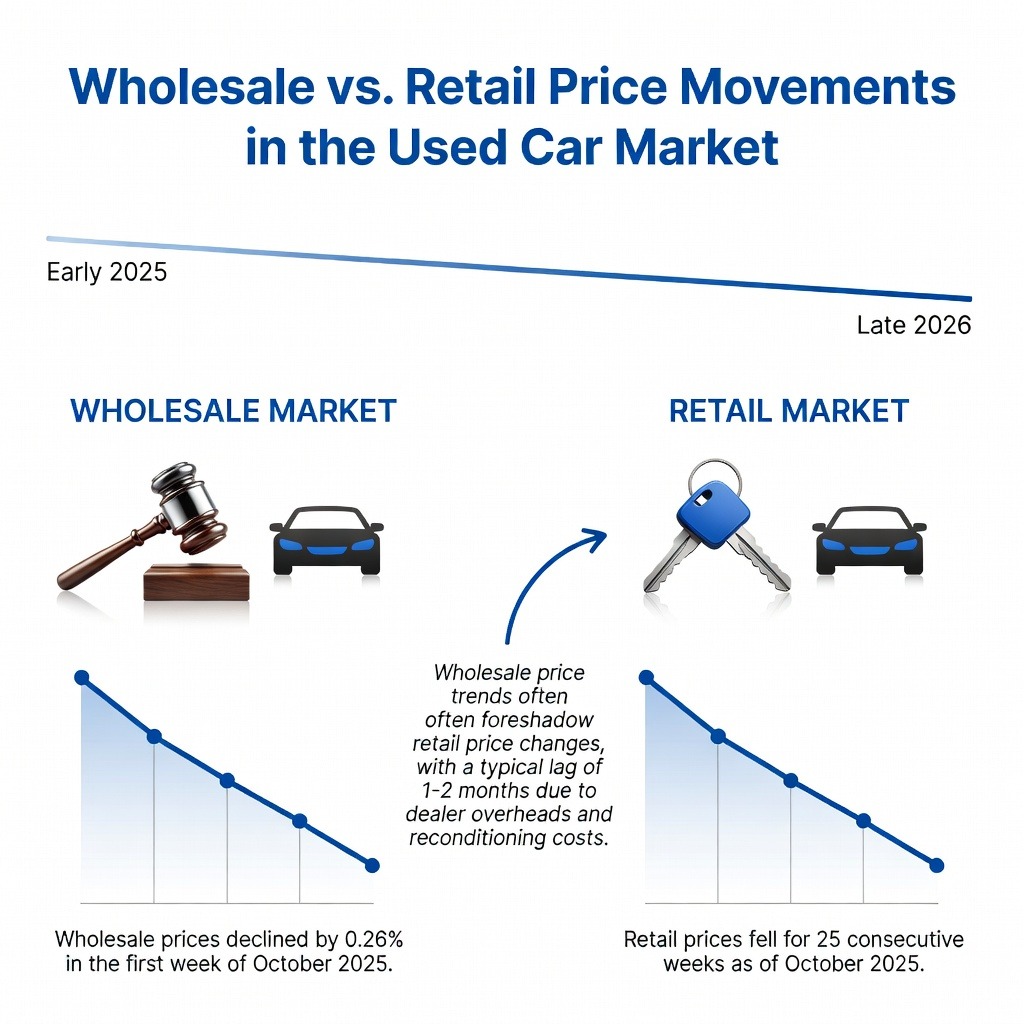
To truly grasp used car pricing, differentiate between wholesale and retail markets. Wholesale prices are what dealerships pay to acquire vehicles, often through auctions. Retail prices are what consumers pay at the dealership. This distinction matters because wholesale trends often foreshadow retail price movements.
For example, wholesale used car prices fell 0.26% in the first week of October 2025. This decline at the wholesale level typically indicates that retail prices will follow suit, though perhaps with a slight lag and less dramatic fluctuations due to dealer overheads, reconditioning costs, and profit margins. Dealers acquire inventory from wholesale markets, and their pricing strategies are directly influenced by what they pay. Understanding this relationship can give buyers an edge, as a falling wholesale market suggests more room for negotiation at the retail level.
The gap between wholesale and retail prices also accounts for the services a dealership provides, such as vehicle inspections, reconditioning, warranty options, and the convenience of a structured sales process. When evaluating a potential purchase, knowing that the underlying wholesale market is trending downwards can empower you to seek a more competitive retail price.
Segment Performance: Sedans, Trucks, and SUVs
The overall market trends don’t tell the whole story; price changes often vary significantly across different vehicle segments. While general used car prices are declining, the inventory supply dictates much of the segment-specific movements. Currently, the nationwide average dealer has a 50-day supply of used cars to sell, which is a healthier inventory level than seen in previous years.
However, this average masks critical disparities. For instance, dealers have just a 36-day supply of used cars under $15,000. This scarcity in the more affordable segment means that while luxury SUVs might see more significant price drops due to higher supply, budget-friendly sedans or smaller SUVs could remain relatively stable or even see less aggressive price reductions. This phenomenon is also reflected in the “days-to-turn” metric, which measures how long a car sits on the lot. Used Retail Days-to-Turn is now at 36 days, down from 55 days late last year, indicating that cars are selling faster even as prices soften.
The top five sellers of the month were listed at an average price of $23,824, which is approximately 7% below the overall average listing price. This suggests that popular, high-volume models can offer good value, especially if they fall within a segment with ample supply. Buyers should pay close attention to segment-specific inventory levels and sales velocity when looking for the best deals.
Strategic Acquisition: Balancing Customization with Pre-Owned Value
When considering a pre-owned vehicle, the goal is always a strategic acquisition – one that balances value, quality, and your specific needs. This involves understanding different types of used vehicles, how to evaluate their worth, and leveraging available tools for negotiation.
Certified Pre-Owned vs Regular Used Vehicles
One of the most significant distinctions in the used car market is between Certified Pre-Owned (CPO) vehicles and regular used cars. CPO cars represent a premium segment of the used market, offering a bridge between new and standard used vehicles. These cars typically come with manufacturer-backed warranties, often extending beyond the original factory warranty, and undergo rigorous multi-point inspections (sometimes 100+ points) by factory-trained technicians. Criteria for CPO status usually include age limits (e.g., less than 5 years old) and mileage limits (e.g., fewer than 100,000 miles). They also often come with perks like roadside assistance and special financing rates.
Regular used cars, on the other hand, are sold “as is” or with a limited dealer warranty. While they are generally more affordable, they lack the comprehensive inspection and extended warranty coverage of a CPO vehicle. The choice between CPO and regular used often boils down to budget, risk tolerance, and the desire for peace of mind. For those seeking a higher level of assurance and a vehicle that has met strict manufacturer standards, a CPO vehicle can be an excellent investment, and you can explore options like Certified Inventory for a curated selection.
Evaluating Age vs Mileage in Valuation
When assessing a used car’s value, the perennial question arises: is age or mileage more important? While both are critical factors, our experience suggests that maintenance history matters most. A meticulously maintained older car with higher mileage can often be a more reliable purchase than a newer car with lower mileage but a spotty service record.
Older low-mileage cars, while seemingly attractive, can sometimes harbor issues related to part deterioration from age rather than use. Rubber seals, hoses, and fluids can degrade over time regardless of how many miles the car has driven. Conversely, a newer car with higher mileage, if it has been consistently serviced and cared for, might have more robust components due to regular use and preventative maintenance. It’s crucial to research common issues for specific models and years, obtain a vehicle history report, and always, always have an independent mechanic perform a pre-purchase inspection.
Negotiation Tools and Fair Purchase Price
Securing a good deal on a used car requires preparation and the right tools. Kelley Blue Book (KBB) values, for example, are widely recognized for their accuracy, built on over 90 years of experience and massive transaction data, updated weekly. KBB’s Fair Market Range is a particularly useful tool, providing a realistic price range based on local market conditions, mileage, condition, and options. It accounts for seasonal trends and regional variations across 100+ U.S. geographies.
Other valuable resources include vehicle history reports from services like AutoCheck or CARFAX, which typically cost around $40. These reports reveal crucial information such as accident history, service records, and title issues, all of which significantly impact a car’s value. We also recommend an independent inspection from a trusted mechanic or a service like Alliance Inspection Management (AiM). This objective assessment can uncover hidden problems and provide leverage for negotiation.
When you’re ready to negotiate, use the Fair Market Range as your guide. Start with the Typical Listing Price, but be prepared to negotiate towards the lower end of the range, especially if your independent inspection uncovers minor issues. For those looking for exceptional value, exploring options like Bargain Inventory or Cars Under 10k for Sale Bremerton WA can reveal hidden gems. The goal is an informed purchase, ensuring the price reflects the vehicle’s true condition and market value.
Future-Proofing Your Investment: Safety and Reliability
Beyond the initial purchase price, the long-term value and peace of mind derived from a used car largely depend on its safety features and inherent reliability. These factors contribute significantly to the overall cost of ownership and your driving experience.
Prioritizing Safety in Older Models
In recent years, advanced driver assistance systems (ADAS) have become increasingly common in new vehicles. When buying a used car, especially an older model, prioritizing these safety features is paramount. While they might not be standard on all trims or model years, look for vehicles equipped with Automatic Emergency Braking (AEB) with pedestrian detection and Blind Spot Warning. These technologies can significantly reduce the risk of accidents.
Even if a used car doesn’t have the latest ADAS suite, ensure it has fundamental safety features. Check its crash test ratings from organizations like the NHTSA and IIHS. Consider the structural integrity, airbag count, and anti-lock braking systems (ABS). Retrofitting advanced safety features can be costly or impossible, so it’s best to buy a car that already includes the safety technology you deem essential.
Long-Term Reliability and Depreciation Factors
The average age of cars on the road in the U.S. has risen to nearly 13 years, underscoring the importance of long-term reliability. A reliable vehicle will save you money on unexpected repairs and provide consistent performance. Before purchasing, consult reliability surveys from reputable sources like Consumer Reports. These surveys often highlight models with a history of fewer mechanical issues.
Depreciation plays a critical role in the true cost of ownership. While new cars depreciate rapidly, used cars have already absorbed the steepest part of this curve. However, depreciation continues, influenced by age, mileage, condition, and market trends. A car with a strong reputation for reliability will generally depreciate slower than one known for frequent problems. This means that a reliable used car not only costs less to maintain but also retains more of its value over time. Factors like consistent maintenance, as detailed in service records, contribute to both mechanical longevity and a higher residual value. We encourage exploring our Used Ford Models Bremerton WA for reliable options that often hold their value well.
Frequently Asked Questions about Custom Vehicle Ordering
Is custom vehicle ordering more expensive than buying from the lot?
Not necessarily. While custom ordering allows you to add every option imaginable, which can increase the price, it also allows you to avoid paying for features you don’t want or need that might be bundled into a pre-configured vehicle on the lot. Often, the base price of a custom-ordered vehicle is comparable to, or even less than, a similarly equipped in-stock model, especially when dealership inventory is tight and demand is high. The primary difference is the ability to control every aspect of the cost.
How long does the custom vehicle ordering process typically take?
The timeline for custom vehicle ordering can vary significantly depending on the manufacturer, the specific model, current supply chain conditions, and the complexity of your chosen specifications. Historically, it could range from a few weeks to several months. In today’s market, with ongoing global supply chain challenges, wait times might be longer. Your dealership will provide the most accurate estimate based on current production schedules. It’s always best to inquire about the estimated delivery time upfront when placing your order.
Can I trade in a used car when placing a custom order?
Yes, absolutely. Most dealerships, including ours, are happy to accept trade-ins when you place a custom vehicle order. The value of your trade-in can be applied directly towards your new custom vehicle, reducing the overall purchase price or your financing amount. We recommend getting an accurate appraisal of your current vehicle’s value, perhaps through a tool like the KBB Instant Cash Offer, before finalizing your custom order. This ensures you have a clear picture of your financial contribution. You can even explore our Featured Vehicles Pre-Owned or Promotions Used for ideas on what your trade-in might be worth if you’re considering selling it yourself.
Conclusion
The automotive market, whether for new custom orders or pre-owned vehicles, is a landscape of constant change and opportunity. By understanding the nuances of custom vehicle ordering, the dynamics of used car pricing, and the critical factors of safety and reliability, you empower yourself to make informed decisions.
From tailoring a brand-new vehicle to your exact specifications to navigating the current trends in used car valuation, our goal is to provide you with the insights needed for a strategic acquisition. The market’s recent shifts, with used car prices showing a steady decline, present a more favorable environment for buyers. However, diligence in research, thorough inspections, and leveraging accurate valuation tools remain paramount.
Whether you opt for the personalized journey of a custom-ordered vehicle or the proven value of a pre-owned gem, the key is to ensure your automotive investment aligns perfectly with your needs, budget, and desire for long-term satisfaction. We are committed to helping you find tailored automotive solutions, ensuring you drive away confident in your choice.
